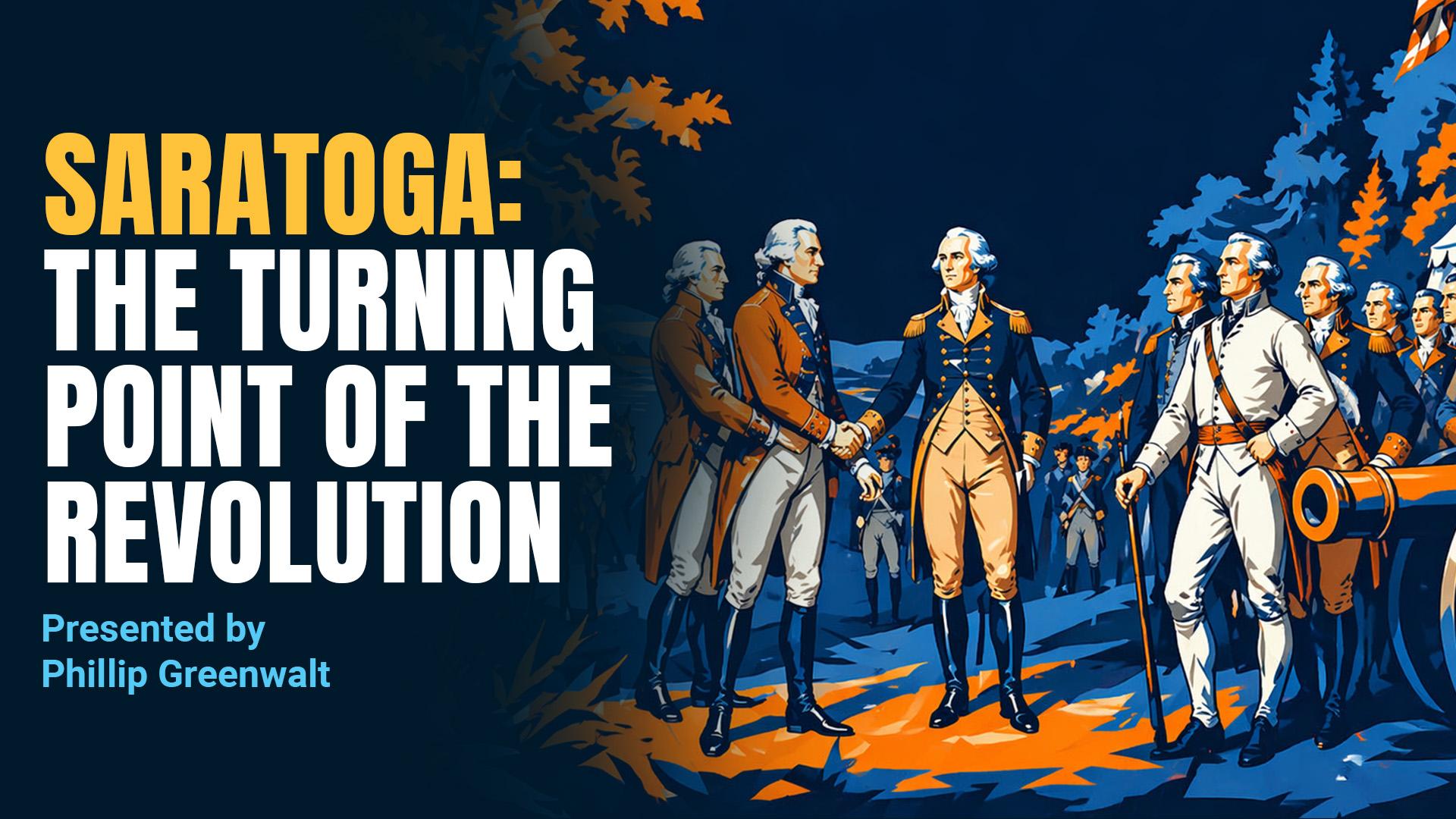
Saratoga: The Turning Point of the Revolution
In 1777, in a shocking turn of events, a professional British army surrendered to an American force at Saratoga, New York. The surrender dramatically changed the course of America’s war for independence. Phillip Greenwalt, author of The Winter that Won the War, explains how and why it happened.
Topics
Hosted By
 Phillip Greenwalt
Watch Related Video:
It’s unlikely the Americans could have won the Revolution on their own. They needed a powerful ally.
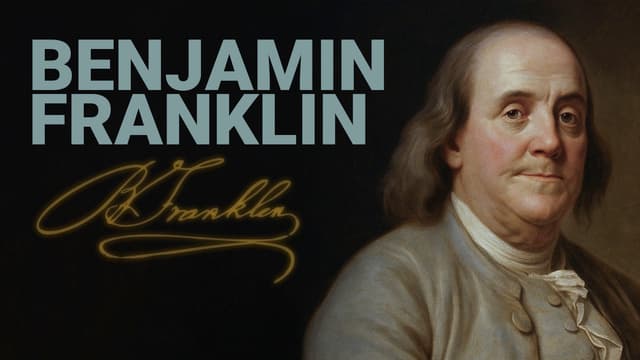
This is why they sent their greatest diplomatic asset, Benjamin Franklin, to Paris soon after the signing of the Declaration of Independence. But Franklin made little progress with the French. Nobody wants to back a loser.
And that’s what America looked like…until the Battle of Saratoga.
At the start of 1777, the British were eager to end the war.
This is how they would do it: General John Burgoyne would move down from Canada into the Hudson River Valley of New York, isolating New England from the rest of the country. General William Howe would move up from New York City to support Burgoyne.
That was Burgoyne’s plan, anyway. But Howe had his own plan: capture the American capital, Philadelphia, and destroy Washington’s army in the process.
In other words, there were two plans, which is tantamount to saying, there was no plan.
Not a good way to run a war.
In June 1777, Burgoyne ordered Lieutenant Colonel Barry St. Leger, to seize Fort Stanwix near present-day Rome, New York. This would secure Burgoyne’s supply lines from Canada, a crucial linchpin to his overall strategy.
When St. Leger arrived outside the fort, he presented its twenty-eight-year-old commander, Colonel Peter Gansevoort, with a choice: surrender or face annihilation. But the cool-headed colonel wasn’t intimidated: “It is my determined resolution...to defend this…garrison to the last extremity...”
Gansevoort was true to his word. After a three-week siege, the English colonel was no closer to achieving his objective. It was a harbinger of what was to come: nothing would go the way it was supposed to for the British.
Without the fort, Burgoyne’s supply lines would be stretched dangerously thin, the thing he most feared. For this reason, many historians believe that at this point, the general should have aborted the mission.
But Burgoyne didn’t see it that way. He was determined to take Albany, his ultimate goal. By September 18, he and his force of 6,000 British and German mercenaries were just outside the settlement of Saratoga.
At noon the next day, the Americans, led by General Horatio Gates and his energetic subordinate, General Benedict Arnold—yes, that Benedict Arnold—collided with the British at a field owned by a local farmer, John Freeman.
What ensued was a brutal, seesaw battle. Both sides fought bravely, none better than the patriot riflemen led by Colonel Daniel Morgan. His sharpshooters picked off hundreds of redcoats, then melted behind the trees for cover.
Although the disciplined British managed to hold their ground, thus technically winning the battle, they suffered grievously: 600 casualties, twice that of the Americans.
For the next three weeks, a standoff ensued. The rebels, however, were getting stronger with new troops arriving almost daily and the British, cut off from all support, were getting weaker.
But all was not well in the American camp. Gates and Arnold engaged in a bitter feud. Arnold was deeply insulted that Gates had not given him the credit he felt he deserved in his report to Congress about the battle at Freeman’s Farm, and Gates felt that Arnold’s anger was both unjustified and insubordinate. Fortunately, the two outsized egos managed to set aside their differences before the next engagement.
That came on October 7 in what is known as the Battle of Bemis Heights and proved to be decisive.
Once again, nothing went Burgoyne’s way. His plan was to send out a reconnaissance force to harvest wheat from a nearby field and to gather intelligence about the Americans’ strength. But Gates had stationed men all over the area, and Burgoyne’s secret mission was quickly discovered.
This was the kind of moment Arnold lived for. He jumped on his horse, gathered his men, and headed straight for the enemy.
Badly outnumbered, the British came under withering fire from Daniel Morgan’s riflemen and Arnold’s brigade. The British losses were devastating — over 1,100 men to the Americans’ 330.
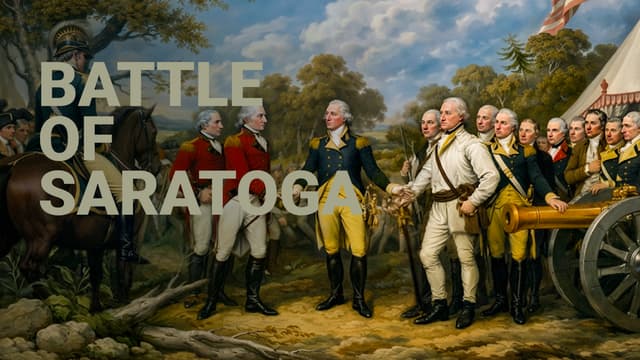
After holding out for reinforcements that never came, on October 17, 1777, Burgoyne did the unthinkable. He surrendered a professional British field army to a ragtag collection of colonists. All 5,000 of his remaining soldiers became prisoners of war.
The American victory at Saratoga changed the course of the Revolution.
First, it finally convinced the French to come into the war on the American side.
Second, it convinced the British to change their strategy: they gave up fighting in the north. Instead, they would turn south, a region supposedly more loyal to the crown.
And third, the rebels had a newfound confidence. Not only could they skirmish with the British, but they could also beat them in a head-on fight.
The battle was a low point for Burgoyne and a high point for Gates. But the name best remembered by history is, of course, Benedict Arnold — not for his bravery in 1777 but for his ultimate betrayal in 1780. His name would become synonymous with treason.
But at Saratoga, it was all glory.
I’m Phillip Greenwalt, author of The Winter that Won the War, for Prager University.