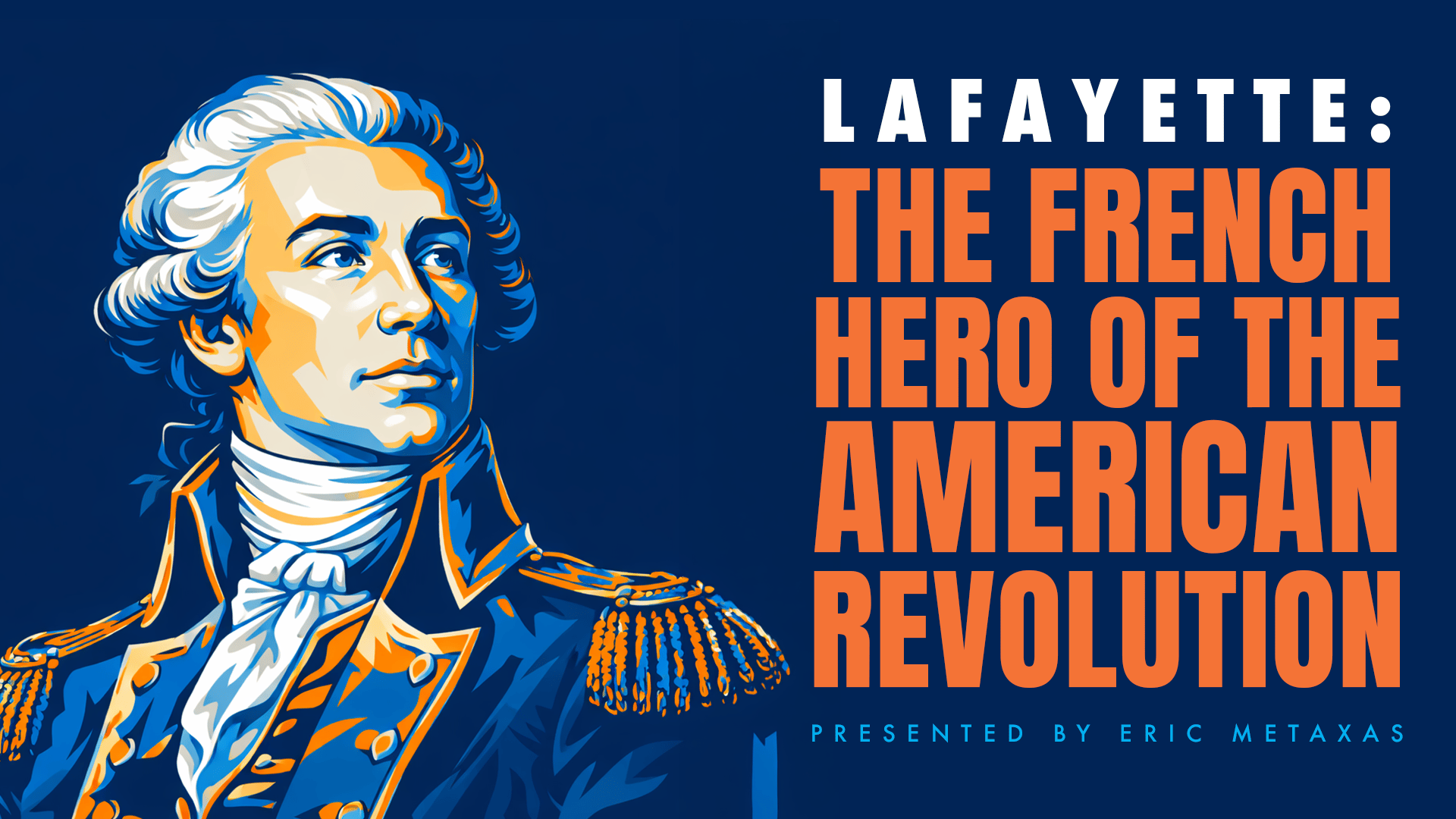
Lafayette: The French Hero of the American Revolution
He was French by birth—but American by conviction. Wounded in battle, tireless in diplomacy, and fiercely loyal to George Washington, Lafayette became one of the Revolution’s most essential actors. Eric Metaxas, author of Revolution, tells the story of the French hero who helped America win its independence.
Click here to watch more videos in the Unsung Heroes of the Revolution playlist.
Topics
Hosted By
 Eric Metaxas
America could not have won its war of independence without the help of the French. And the French would not have helped America to the extent they did without the efforts of Marie-Joseph Paul Yves Roch Gilbert du Motier, Marquis de Lafayette. His devotion to the American cause was total; his impact on its outcome, profound.
From the moment he first heard about the American Revolution, he knew he had to be part of it. He had two motivations, one lofty and one low. He was drawn to the high ideals of the rebellion. He also loved the idea of sticking it to the British, France’s traditional foe.
A well-connected member of the French royal court of Louis XVl, both by birth and marriage, he was all of nineteen when he decided he must abandon his career in the French military to sail to America and fight with the Americans. Complicating matters was the fact that his new wife had just given birth to their first child.
But even this did not deter him. Every fiber in his being told him that history was being made in North America. He would not miss the chance to be part of it. To the sorrow of his bride, the fury of his powerful father-in-law, and the deep annoyance of his sovereign, he sailed for America in April 1777.
Armed with a letter of introduction from the American emissary to France, Silas Deane, he presented himself to the Continental Congress in Philadelphia. They barely gave him the time of day. The army had no need for a French officer who spoke virtually no English.
Young Lafayette’s story could have ended right there. But a chance dinner invitation brought him into the company of George Washington. The General was cautious about new acquaintances — everybody wanted a piece of him — but he took an instant liking to the Frenchman. This was no mere adventurer, Washington sensed. This was someone who understood what the Americans were fighting for. Washington arranged for Lafayette to become an officer under his command and quickly brought him into his inner circle.
Fiercely loyal to his mentor, whom he addressed as “Mon General,” Lafayette proved himself to be a capable and courageous soldier. In September of 1777, at the Battle of Brandywine, he rallied overwhelmed American troops who had panicked in the face of withering British fire. They might not have understood what he was saying, but they could see what he was doing — fighting and bleeding alongside them — and they loved him for it. Despite being badly wounded in the leg, he helped turn a rout into an organized retreat.
Washington sent his personal physician to look after his brave protégé. The general wanted him back at his side as soon as possible.
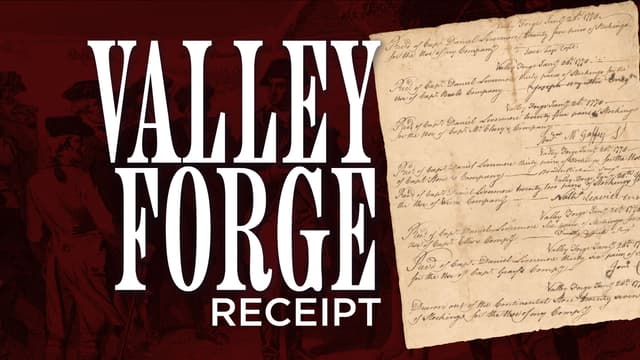
And for much of the war, that’s where Lafayette could be found, including at Valley Forge during the terrible winter of 1777-78. He also saw action at the battles of Barren Hill, Monmouth, and Rhode Island. He was, as General Nathanael Greene put it, “determined to be in the way of danger.”
But Lafayette not only served the Glorious Cause as a soldier; he also served it as an unofficial diplomat. Several times during the war, he returned to France. While there, he tirelessly and successfully lobbied the king and his ministers on America’s behalf.
In the spring of 1780, Lafayette returned to America having secured a promise from the French government of new military support.
That support proved critical in the decisive Battle of Yorktown in October of 1781. Sensing an opportunity to strike a fatal blow, Washington unleashed the full might of his army on the British position. Lafayette led a key assault on enemy fortifications. Outnumbered, outgunned, General Cornwallis’s fate was sealed. His surrender at Yorktown convinced Parliament that the war could not be won, prompting King George III to finally recognize America’s independence.
Lafayette returned to France in triumph, a mythic figure on two continents. He had accomplished both of his goals: help the Americans attain their freedom and exact revenge on the British.
Brimming with enthusiasm for the American principles of liberty, Lafayette now wanted to share those principles with the citizens of France.
But France was not America; the French people had no experience in self-government. When the French Revolution broke out in 1789, it soon became clear that it would not have the same outcome as its American progenitor. What started as a passion for liberty turned into a passion for blood. Lafayette was swept up in the maelstrom, barely escaping with his life.
In 1824, at age sixty-six, Lafayette returned to America. By then, he was the last survivor among the great Revolutionary War heroes. He was celebrated, almost worshipped, everywhere he went. Even today, over 600 towns, cities, and schools in America bear his name. So does a park in the nation’s capital where his statue has a clear view of the White House.
I’m Eric Metaxas, host of Socrates in the City and author of Revolution, for Prager University.