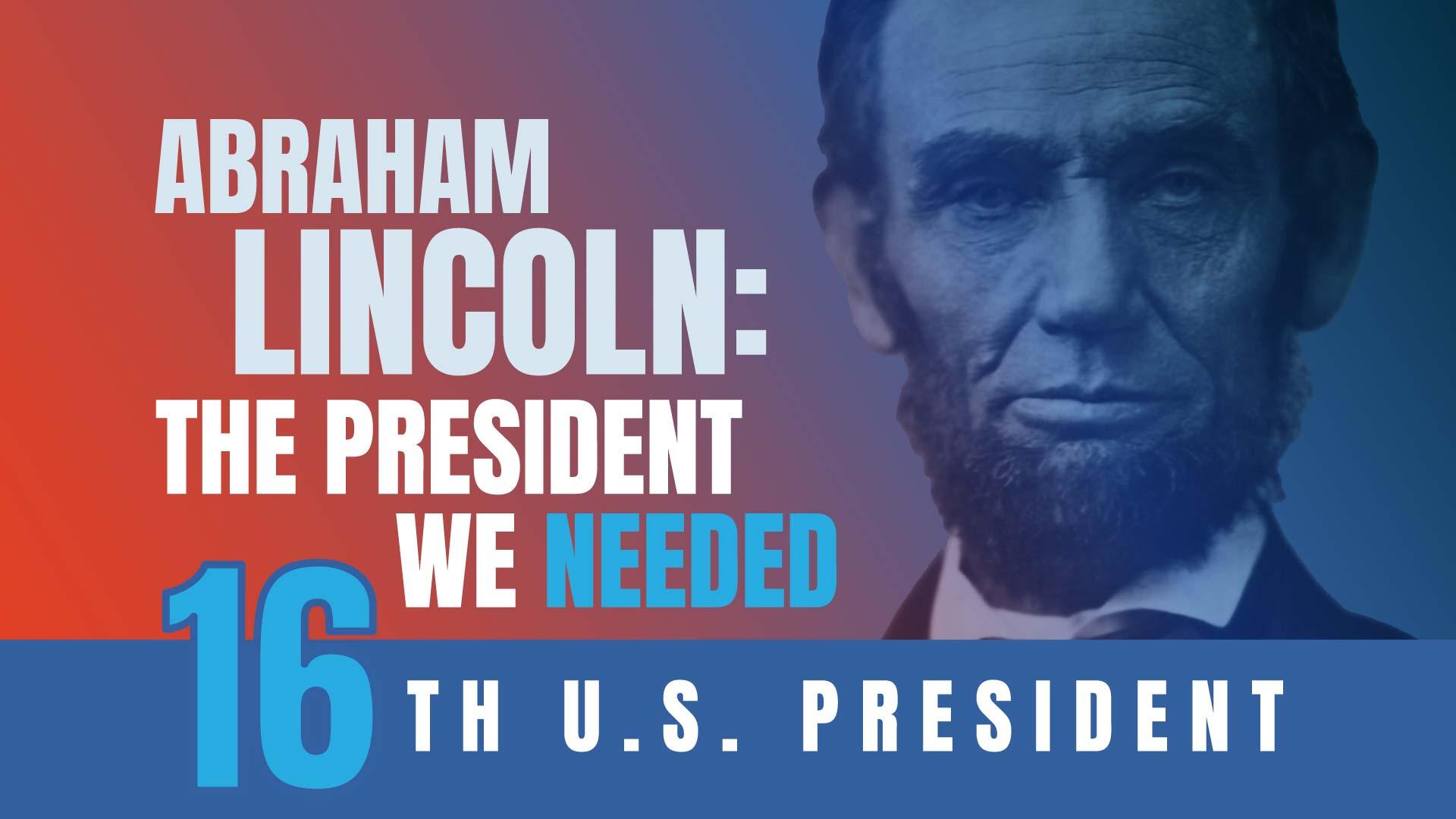
Abraham Lincoln: The President We Needed
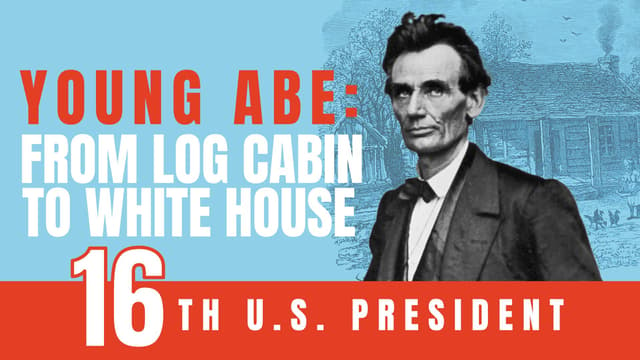
When Abraham Lincoln became the 16th President of the United States, he did not believe the country would soon be embroiled in a costly and bloody civil war. Allen Guelzo, author of Abraham Lincoln: Redeemer President, explains why Lincoln’s steely resolve and moral leadership were exactly what the country needed during its darkest days.
This video is part of the American Presidents 5-Minute Video Series.
Once you've seen them all, take our Presidents Quiz.
Topics
Hosted By
 Allen Guelzo
When Abraham Lincoln came to Washington in March of 1861 following his election as the 16th President of the United States, he had no thought that the country would soon be embroiled in a costly and bloody civil war.
The slave states of the South had threatened secession in the past and always pulled back. This time, Lincoln believed, would be no different.
He was open to accommodation if it would avoid armed conflict.
But he was unshakeable on one point.
Lincoln insisted that secession was a Constitutional impossibility and that he was obligated by his presidential oath to defend the integrity of the United States.
So, when the Confederates launched their attack on Fort Sumter in Charleston, South Carolina on April 12, 1861, Lincoln called up federal troops and declared a naval blockade of the Southern coast.
The war was on.
And Lincoln was completely unprepared for it.
Everything went badly at first. A hastily assembled federal army met with a humiliating defeat at the first major battle of the war at Bull Run in Virginia.
More defeats followed.
But Lincoln stood firm. New armies were recruited; fresh funds were raised through taxes and bond sales, and the naval blockade was strengthened.
Gradually, the military tide turned. In the east, Union forces foiled an attempted invasion of Maryland and Pennsylvania at the bitter battle of Antietam in September 1862, and a second Confederate invasion the following summer was smashed at the battle of Gettysburg.
In the west, a federal naval flotilla seized the major Confederate port of New Orleans. This was followed by Union General Ulysses Grant’s capture of the Confederate citadel on the Mississippi River at Vicksburg.
Lincoln saw in Grant a man who had the qualities to bring the war to a finish. In March 1864, he brought Grant to Washington to plan a major new offensive. Their plan was blunt, bloody, and effective: overwhelm the Confederacy with superior Union firepower. Grant pursued it relentlessly, aided by his equally relentless subordinate, William Tecumseh Sherman.
Lincoln rode the wave of Union victories to re-election in November 1864.
On April 9, 1865, the war finally came to a close with Lee surrendering to Grant at Appomattox Courthouse near Richmond, Virginia.
Lincoln rightfully deserves credit for his successful prosecution of the Civil War. What is less well known but nearly as significant are the major policy changes he introduced even while the war was being waged.
For six decades, the federal government had been dominated by the Democratic party, and by its suspicion of commerce and manufacturing. Lincoln, however, had come to political maturity in the Whig party which favored the funding of transportation infrastructure to promote commerce, a national banking network to create a stable monetary system, and tariffs to protect American industries from foreign competition.
As president, Lincoln signed legislation that implemented all three of these new directions. This along with his plan to create a transcontinental railroad set the stage for the great industrial expansion of the United States during the last three decades of the 19th century.
And, on January 1, 1863, he issued his Emancipation Proclamation that declared free all the slaves of the rebel Confederacy. This was the precursor to the Thirteenth Amendment to the Constitution in early 1865, forever outlawing slavery in the United States.
In all of these labors, Lincoln displayed astonishing resilience and humility in the face of both loss and victory. “I shall do nothing in malice,” he wrote in 1862. He was true to his word.
By the start of his second term—the first of any president since Andrew Jackson—Lincoln had mastered every aspect of his office.
“The old man sits here,” his personal secretary John Hay marveled, “and wields like a backwoods Jupiter the bolts of war and the machinery of government with a hand equally steady & equally firm.”
His public addresses—especially his dedication remarks at the Soldiers’ National Cemetery at Gettysburg in November 1863, and his second inaugural address, rose to levels of eloquence that no other president has matched.
Sadly, Lincoln had little time to savor his triumphs. On April 14, 1865—only five days after Lee’s surrender—a fanatical Southern partisan, John Wilkes Booth, shot Lincoln from behind while the president was watching a play at Ford’s Theatre in Washington.
Lincoln died the next morning without regaining consciousness.
All the world mourned.
I’m Allen Guelzo, author of Abraham Lincoln: Redeemer President, for Prager University.