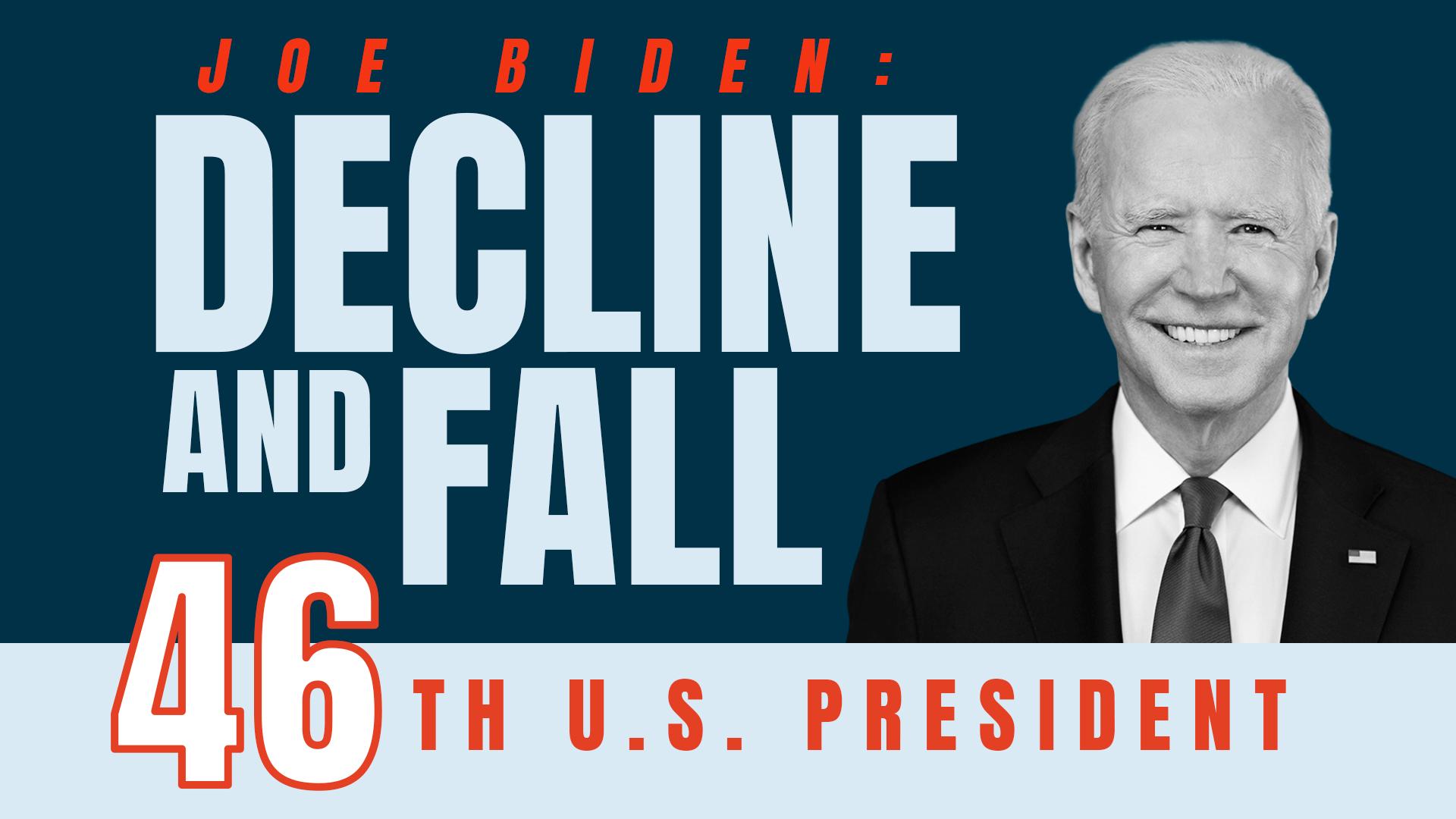
Joe Biden: Decline and Fall
Joseph Biden spent his career chasing one goal: the presidency. After decades of political frustration, he finally became the 46th president of the United States. What happened next is one of American history’s tragic ironies. Presidential historian Tevi Troy explores Biden’s rise and fall.
This video is part of the American Presidents 5-Minute Video Series.
Once you've seen them all, take our Presidents Quiz.
Topics
Hosted By
 Tevi Troy
Joe Biden was a young man in a hurry. Elected to the US Senate at the age of 29, he spent four decades dreaming of becoming president. But then, in one of American history’s tragic ironies, when he finally got there, he was incapable of doing the job. Father Time had exacted a cruel price.
Joseph Robinette—forever known as Joe—Biden was born in the coal-mining town of Scranton, Pennsylvania on November 20, 1942. His father moved the family to Wilmington, Delaware when Biden was ten, but Biden would always stress his working-class Scranton origins.
Young Joe was popular and a good athlete, but just got by academically. At Syracuse Law School, he graduated 76th out of a class of 85.
After getting caught plagiarizing a law review article, a pattern emerged that persisted throughout his life: if he didn’t like a version of his past, he’d make up a better one. Examples include getting arrested when trying to visit South African civil rights activist Nelson Mandela in prison, being shot at while touring Iraq as a senator, and his uncle getting eaten by cannibals in Papua New Guinea during World War II—all fabrications.
In 1972, after a brief tenure on a Delaware county council, he challenged incumbent Republican senator J. Caleb Boggs. Biden’s youthful energy captured the voters’ imagination. In a shocking upset, he defeated Boggs by 3,000 votes.
Before he could take office, tragedy struck. In December 1972, his wife Neilia and one-year-old daughter Amy were killed in a car crash. His sons Beau and Hunter were badly injured.
Biden pushed past his grief and entered the Senate, the youngest member in that exclusive club.
There, Biden thrived. There’s no doubt that he had political skills. You don’t get elected to the Senate seven times, vice president twice, and ultimately president without being good at politics. Winning re-election after re-election, he advanced in seniority and influence.
But make no mistake, the presidency was always his goal.
In 1987, he ran for the Democratic nomination. That attempt failed when he was caught plagiarizing a speech by a British politician. He ran again in 2007 but got swept away by Barack Obama.
Then, Obama, to the surprise of many, tapped Biden to be his running mate. It seemed like a good match of young gun and old pro.
As vice president, Biden served loyally for eight years, but when it came time for Obama to bless a successor, he opted for his former Secretary of State Hillary Clinton. It was a bitter pill.
When Donald Trump shocked the world by defeating Clinton in 2016, Biden’s presidential embers stirred again. At age 77, he reached for the brass ring one more time.
In a close election, Biden came out on top, realizing his life’s ambition.
But he had come to the highest office, not at the apex of his powers, but in his old age. Once a smooth-talking pol, he now struggled to string together complete sentences.
Biden’s old age might have been forgiven if, as promised, he’d unified the nation by governing as a sensible moderate. Instead, he further divided it by moving far to the left.
For example, he changed Title IX to include gender, allowing men to compete in women’s sports. He mandated that the federal government favor “diversity, equity, and inclusion” over merit. He equated people who disagreed with him on racial issues with white supremacists. And he signed the Inflation Reduction Act, which actually boosted inflation by flooding the economy with deficit dollars, almost all of it going to dubious green energy projects, like electric school buses.
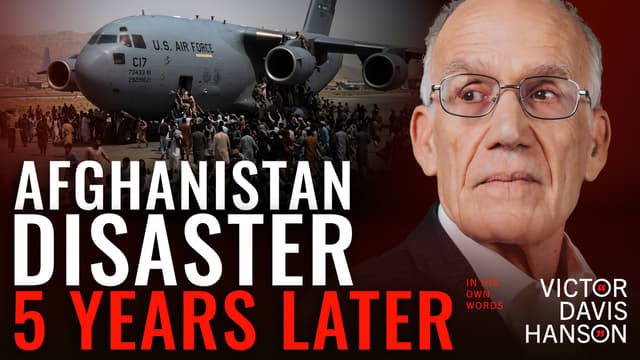
Biden did little better on the foreign policy front. By precipitously withdrawing American troops from Afghanistan in the summer of 2021, he left that country in chaos and handed over billions of dollars worth of military hardware to radical Islamists. He tried to mollify Iran by easing sanctions, providing them with billions in cash, much of which went to terrorist groups like Hamas and Hezbollah. He said he’d defend Israel after the barbaric Hamas attacks on October 7, 2023 and then he micromanaged Israel the whole way. And finally, and perhaps most egregiously, he opened America’s southern border to a virtually unrestricted flow of millions of illegal immigrants.
Through all of this, his cognitive decline became more and more obvious to anyone with eyes to see.
Still, as the 2024 election approached, the mainstream media continued to make excuses for him. Cable news host Joe Scarborough shamelessly declared, “This version… is the best Biden ever.”
A June debate with Donald Trump, once again the GOP nominee, exploded this obvious untruth. Fifty million Americans watched a president whose best days were behind him. The jig was up. Democrats, fearful of electoral disaster, now demanded Biden withdraw from the race.
After an unprecedented pressure campaign by leaders of his own party, Biden relented and endorsed his vice president Kamala Harris.
With Biden gifting her the nomination, Harris went on to lose to Donald Trump. Then Biden further sullied his reputation with a host of unsavory pardons and executive actions on his way out the door.
Joe Biden had achieved his dream—the presidency—but the verdict of history is unlikely to be kind.
I’m Tevi Troy, presidential historian, for Prager University.