The Hall of Evil: Joseph Stalin
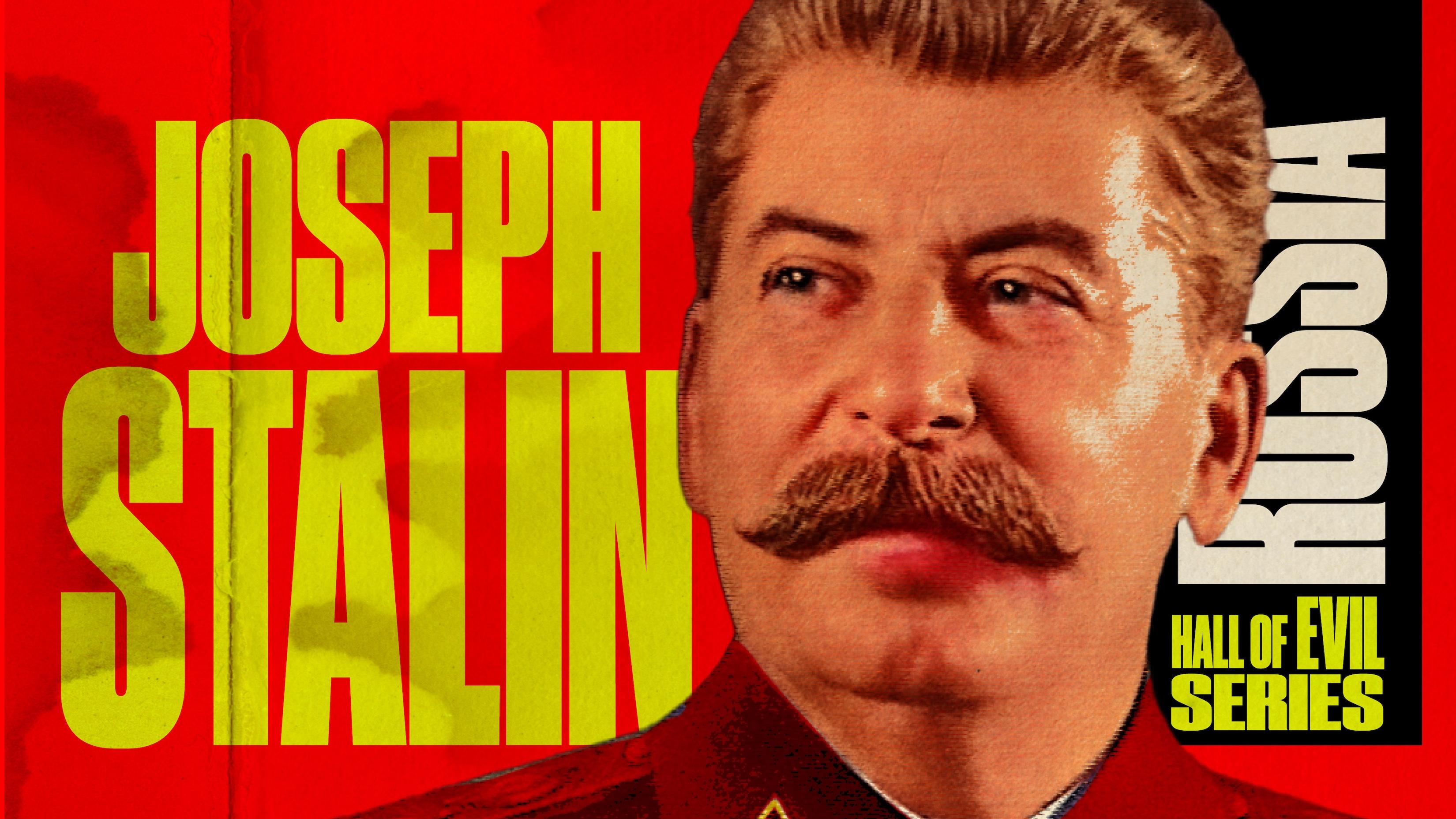
"One death is a tragedy. A million is a statistic." That line perfectly captures Soviet dictator Joseph Stalin’s nihilistic worldview. Millions suffered under his rule—through forced labor, purges, and starvation. Paul Kengor reveals the truth about one of the 20th century’s most ruthless individuals.
This video is part of the Robert W. Plaster Foundation Playlist: Free Enterprise Will Set You Free, which educates Americans on the virtues of our nation's founding principles and the consequences of straying from them.
This video is part of a 6-part series. Click here to watch the entire Hall of Evil series.
Topics
Hosted By
 Paul Kengor
“One death is a tragedy. A million is a statistic.”
That line is attributed to Joseph Stalin, the dictator of the Soviet Union from 1927 until his death in 1953 and perfectly describes his worldview.
Consider this:
Directly or indirectly, he was responsible for the suffering and death of more human beings than any person in history.
He starved to death more than five million Ukrainians in 1932 and 1933.
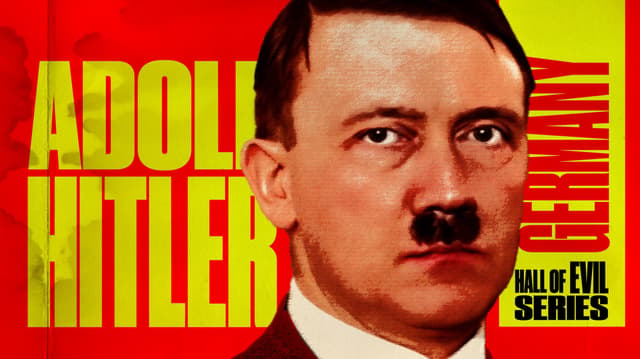
He signed a nonaggression pact with Nazi Germany in 1939, freeing Adolph Hitler to attack Poland, and thus commence World War II.
At least forty million dead in Europe alone.
Without Stalin’s support, it’s unlikely Mao Zedong could have taken over China in 1949.
At least another fifty million dead.
Throw in his support for the Kim dynasty in North Korea, his brutal takeover of Eastern Europe following World War II, and the millions who perished in the infamous Gulags inside the Soviet Union, and the numbers are beyond comprehension.
They become, as Stalin put it, a statistic.
These were the dead. The living suffered decades of pointless misery, never knowing from one day to the next whether Stalin’s secret police would show up and take them away.
The man behind all of this terror was born Joseph Dzhugashvili on December 18, 1878 in Gori, Georgia, then part of the Russian Empire. “Stalin” was the name he later gave himself when he became a communist revolutionary. It means “Man of Steel.”
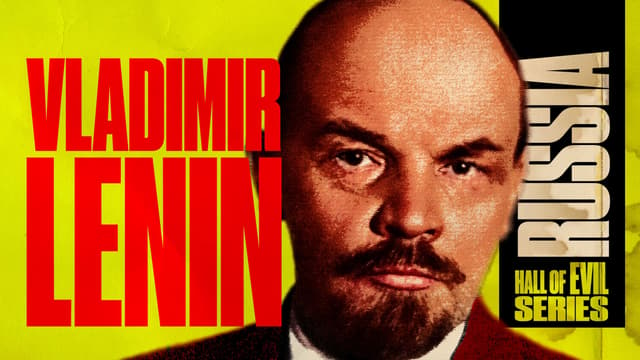
His mother wanted him to be a priest, but Stalin never considered it a serious option – certainly not after he fell under the sway of Vladimir Lenin and his vicious brand of Marxism. Stalin was a jack-of-all-trades – whatever Lenin needed done, Stalin would do it, including bank robberies, assassinations, and then by 1912, writing and editing the Communist Party newspaper, Pravda.
The one thing Stalin never seemed to possess was a conscience. Killing came easily for him and once he got started, he could never stop. He had a simple philosophy: “Death solves all problems. No man, no problem.”
In 1917 Lenin took control of Russia. Stalin was right there with him.
When Lenin died in 1924, Stalin wanted the top job. This wasn’t mere ambition – it was also a matter of survival. Not getting the job meant certain death, a lesson that his chief rival Leon Trotsky learned some sixteen years later when Stalin had him murdered in Mexico.
In retrospect, it seems inevitable that Stalin would lead the party. In addition to being utterly ruthless, he was also the consummate bureaucrat. No detail was too small for his attention. Novels, screenplays, and editorials had to be submitted for his approval. Not infrequently, he would rewrite them to make sure they followed the party line that Stalin himself had set.
Stalin learned to govern from Lenin. The ruling principle was this: either you did what he told you to do or he had you killed or imprisoned. And even if you did what he told you to do, he still might have you killed or imprisoned if he felt you were a threat.
This was the story behind the Great Purge of 1936 to 1938, in which he had his closest allies from his Lenin days, Grigori Zinoviev, Nikolai Bukharin, and Lev Kamenev, tried and executed on fictitious charges of treason.
All allies became enemies sooner or later with Stalin. Not only was he not remorseful when he destroyed them – he was positively gleeful. As he himself once said, “The greatest delight is to mark one’s enemy, prepare everything, avenge oneself thoroughly and then go to sleep.”
Over the next two years, he had some seventy percent of the Party Central Committee and the military hierarchy – admirals, generals, and corps commanders – wiped out.
He simply didn’t trust them, and that was enough.
Stalin’s purge would cost the Soviets dearly. When Hitler invaded Russia in June 1941, breaking his 1939 nonaggression pact with Stalin, there were almost no competent generals left to defend the home front. Millions of Soviet soldiers were slaughtered by the German war machine before the Soviet army was able to recover.
The Soviets eventually triumphed over the Nazis, but not before losing 25 million of their own people – the highest number of deaths of any country in the war – many of them sacrificed to Stalin’s paranoia and incompetence.
But Stalin paid no price. In fact, the war made him more powerful than ever, his cult of personality reaching staggering new heights. Stalin wasn’t the leader of the Soviet Union– he was the Soviet Union.
Initially, his wartime allies, American President Franklin Roosevelt and British Prime Minister Winston Churchill assumed that once the war was over, the Soviet army would return to Russia. But Stalin had no such intention.
Instead, the infamous Iron Curtain soon descended over Eastern Europe. The Cold War had begun – the United States vs. the Soviet Union.
In March 1953, Stalin, age 74, suffered a massive stroke. The doctors who attended him were afraid to do anything. What if they made a mistake? When they finally started treating him it was too late.
It took three agonizing days for Stalin to die, but the Soviet Union endured, immiserating millions of people for another four decades – an inglorious testimony to one of the worst people who ever lived.
I’m Paul Kengor, Professor of Political Science at Grove City College and editor of The American Spectator, for Prager University.