The Hall of Evil: Adolf Hitler
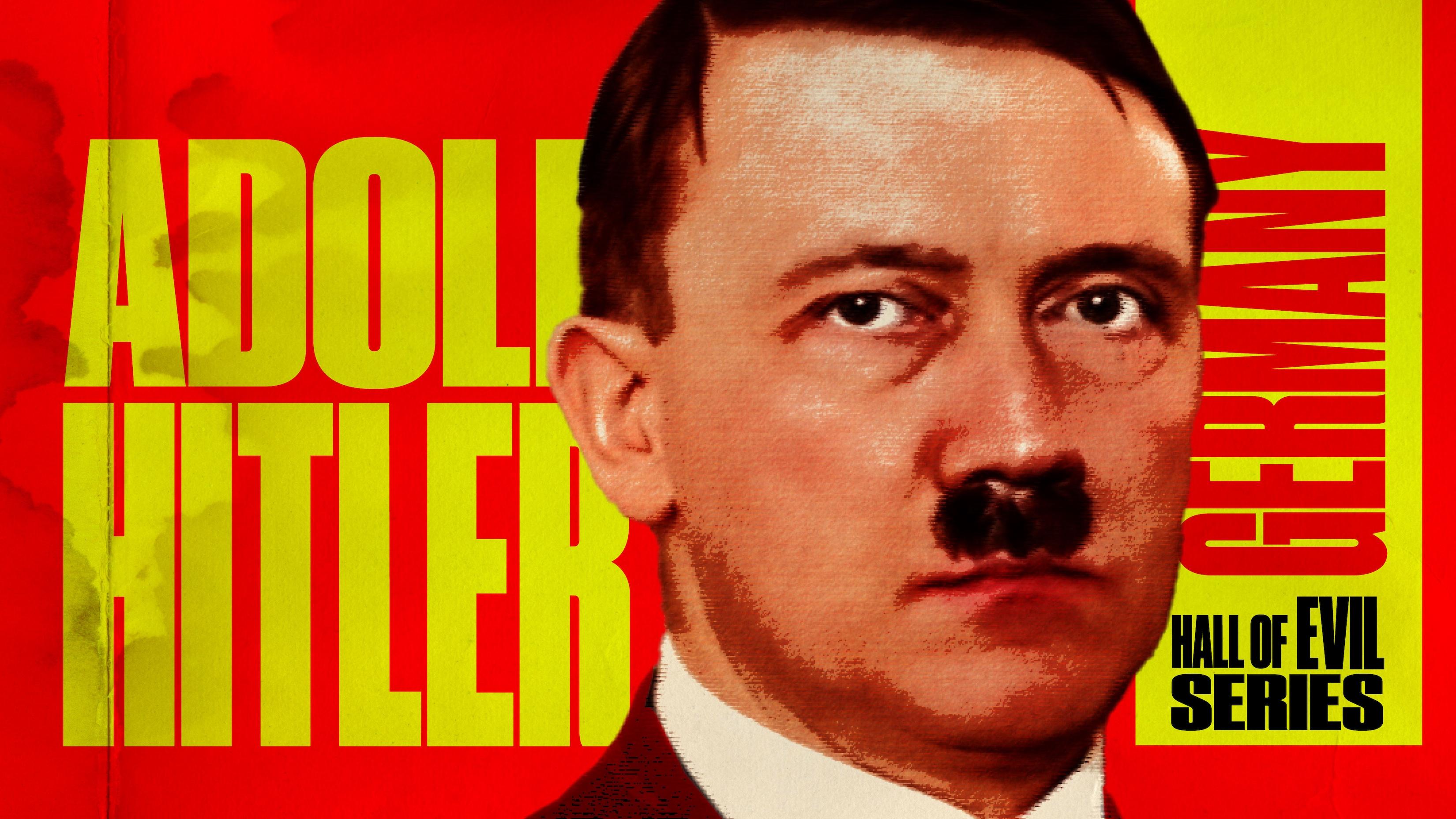
Paul Kengor, Professor of Political Science at Grove City College, explains the evil force that was Adolf Hitler, the most notorious dictator of the 20th century—from the slaughter of six million Jews in Nazi death camps to the deaths of over 40 million people during World War II.
This video is part of the Robert W. Plaster Foundation Playlist: Free Enterprise Will Set You Free, which educates Americans on the virtues of our nation's founding principles and the consequences of straying from them.
This video is part of a 6-part series. Click here to watch the entire Hall of Evil series.
Topics
Hosted By
 Paul Kengor
There have probably been more books written about Adolf Hitler than any single person in history. They all pose the same question: what animated him?
No one has come up with a satisfactory answer.
Everyone knows, for example, of Hitler’s obsessive hatred for Jews. But no one can explain exactly where that hatred came from. There’s no evidence that he hated Jews as a young man or that some Jewish person cheated or hurt him or his family. In fact, the doctor who took care of his beloved mother was Jewish, and by most accounts, Hitler never blamed him for her death.
The one conclusion we can draw about this man is this. He was pure evil—a demonic lunatic.
Adolf Hitler was born on April 20, 1889, in a small Austrian town near the German border.
There was nothing especially foreboding about his childhood—no stories of him torturing animals; no hint of the monster he would become. Like his fellow mass murderer Mao Zedong, Hitler adored his mother who, by all accounts, doted on him. When she died when Hitler was 18, he was grief-stricken. For the rest of his life, he kept a picture of her next to his bed.
His first ambition was to be an artist, and though he showed some talent, he didn’t show enough to make a career out of it.
Alone and adrift, he volunteered to serve in the German army when the First World War broke out in 1914. Wounded at the Battle of the Somme, he was awarded the Iron Cross for bravery.
In November 1918, he was in a hospital recovering from a mustard gas attack when the German High Command surrendered. The humiliating surrender terms as spelled out in the Treaty of Versailles infuriated him, as they did many Germans.
He vowed revenge. But revenge on whom?
The answer turned out to be the Jews. They were the ones who had betrayed Germany. How and why Hitler reached this conclusion remains one of the many mysteries of his life.
In Hitler’s warped mind, these Jews were polluting the pure blood of the Aryan race—the only race he believed was fit to rule.
Hitler took this message to the German people and got … nowhere.
In 1923, he tried to overthrow the German government with a small group of like-minded fanatics, the early core of what would become the National Socialist German Workers' Party, or the Nazi Party; Nazi being short for National Socialist.
The failed Beer Hall Putsch, as it came to be called, landed Hitler in jail. There he wrote his infamous manifesto, Mein Kampf (“My Struggle”). In it, he laid out his grand plan by which Germany would establish itself as a world power to rival America and Britain.
There were two essential elements to this plan: the first was the elimination of the Jews who he held responsible for the twin evils of capitalism and communism. For Hitler, the goal of both these economic systems was the same: Jewish domination.
The second element was the concept of living space, or “Lebensraum.” Germany, he believed, needed more land, and that land would be found in the Slavic East, especially in Russia.
Once out of jail, Hitler slowly built up his following, but again gained little traction. That changed with the onset of the worldwide Great Depression. As Germany spiraled into economic chaos, it became ripe for a demagogue who promised to fix the country.
Hitler was the demagogue and Nazism was the movement. His giant rallies mesmerized much of the German populace. Here was the strongman who would save them and lift them to glory.
In 1932, the Nazis won 37% of the popular vote, the most of any party. The next year Hitler was made chancellor. Once in power, he had no intention of ever giving it up. He planned a thousand-year Third Reich.
Hitler’s first action was to re-arm Germany in preparation for the war that he knew was coming. He knew it because he was going to start it.
He made his move in September 1939 with the invasion of Poland, crossing the “red line” that brought him into conflict with Britain, starting World War II. In 1940, Hitler moved against Holland, Belgium, and France, taking all three in spectacular fashion.
His war plan was to knock the Western powers out of the war so he could attack the Soviet Union in the East. This he did in June 1941.
Everywhere the German army went, the German army won. But his spectacular victories in 1940 and 1941 turned into catastrophic defeats in 1942 and 1943. By 1944, the end of Hitler and the Nazis was in view.
Hitler had fatally miscalculated the determination of Britain, the resilience of Russia, and the industrial power of America. But no matter how bad things got, he never wavered in his greatest ambition: to kill the Jews, every man, woman, and child.
He almost succeeded.
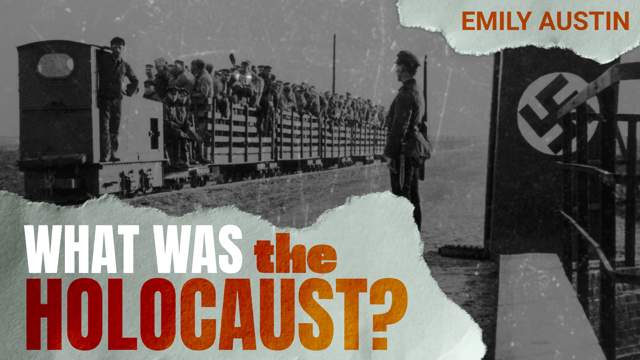
The Nazis had murdered two-thirds of Europe‘s Jews—six million souls—by the time the war ended in May 1945. Across the entire continent, over 40 million people were dead.
Hitler himself was one of the final additions to that morbid count. Deep in a bunker in Berlin, he stuck a gun to his head and pulled the trigger.
No matter how many more books are written about him, what Hitler did and why he did it will never make sense.
I’m Paul Kengor, Professor of Political Science at Grove City College and editor of The American Spectator, for Prager University.