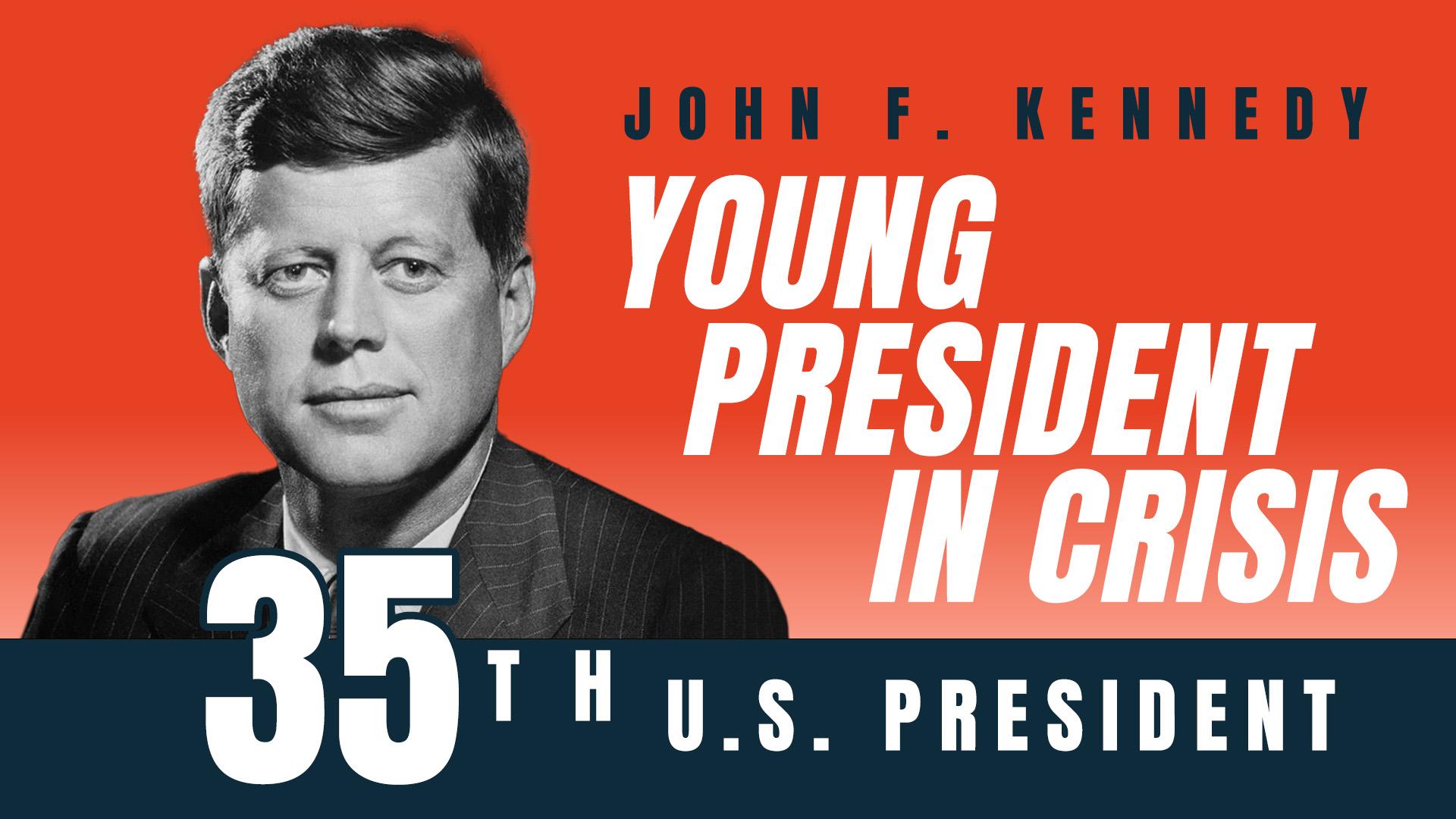
John F. Kennedy: Young President in Crisis
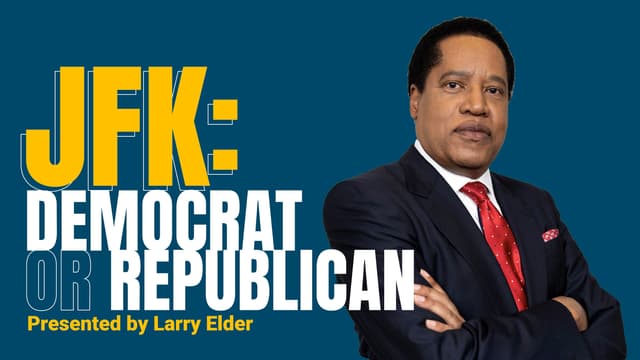
With John F. Kennedy at the helm, everything seemed possible—economic prosperity, progress toward racial equality, and even putting a man on the moon. But it all came crashing down in an instant. Larry Elder details the incredible career and legacy of JFK.
This video is part of the American Presidents 5-Minute Video Series.
Once you've seen them all, take our Presidents Quiz.
Topics
Hosted By
 Larry Elder
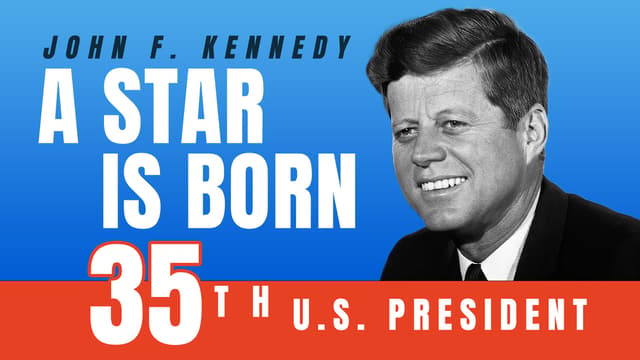
Everything about John F. Kennedy, the 35th President of the United States, was appealing: his good looks, his glamorous wife Jackie, their picture book children, Caroline and John Jr.
JFK personified how America wanted to see itself: youthful, forward-looking, confident.
But Kennedy had his doubters.
Did he have the maturity and experience to lead the most powerful nation on earth?
Early on, it seemed the answer was no. Within three months of taking office, he botched his first major foreign policy test, a poorly planned attempt to overthrow the communist government in Cuba. The failure, now known as the Bay of Pigs fiasco, was an international embarrassment.
His meeting in Vienna in June 1961 with Soviet leader Nikita Khrushchev didn’t help matters. Khrushchev pushed Kennedy around like a playground bully.
These early failures might have broken a lesser man, but Kennedy, a World War II Navy combat veteran turned out to be made of very stern stuff. The next confrontation with the Communists would be different.
That confrontation happened in October 1962. Khrushchev, thinking he could intimidate Kennedy again, ordered the secret installation of nuclear-armed missiles in Cuba, just 90 miles from the Florida coast.
Kennedy ordered a blockade of the island, insisting that the missiles be immediately removed. What ensued was a high-stakes standoff—the Cuban Missile Crisis. Kennedy’s advisors estimated 80 million Americans would die if war broke out. The Soviets could expect even worse losses.
The world held its breath.
This time, it was the Soviet dictator who blinked. The missiles were removed.
The world breathed a huge sigh of relief, and America could get on with its seemingly limitless future because there would actually be a future.
Kennedy called his vision the New Frontier. It would feature significant tax cuts to get the economy roaring again, an ambitious national project—land a man on the moon by the end of the decade—and more progress on civil rights.
When Kennedy entered office, marginal tax rates were ridiculously high—up to 91% for personal income; 52% for corporate. This was somewhat alleviated by various deductions, but as Kennedy noted, the high rates stunted “the growth of profits and pay checks.”
Another way to unify the nation was to create a national project everyone could get behind, something that would appeal to America’s can-do spirit. It would also be a way to demonstrate that American capitalism could do things that no other economic system could. Russia had taken an early lead in the space race. Kennedy was determined that America should leave the Russians in the space dust.
“We choose to go to the moon in this decade and do the other things, not because they are easy, but because they are hard … because that challenge is one that we are willing to accept, one we are unwilling to postpone, and one which we intend to win…”
But there was another challenge back on Earth that would be equally hard, and that would be to guarantee civil rights for all Americans.
Kennedy had to walk a political tightrope. He needed the Southern vote and the Southern vote was still largely for segregation. He also believed the best way to remedy discrimination was to improve the economic lot of all American citizens.
"There is little value,” he said, “in a Negro's obtaining the right to be admitted to hotels and restaurants if he has no cash in his pocket and no job."
Although Kennedy didn't move as fast on civil rights issues as many of his advisors wanted, he clearly recognized that something had to be done.
In 1963, he gave a televised speech to the nation in which he said, “... Are we to say to the world, and much more importantly, to each other that this is the land of the free except for the Negroes … ? [T]he time has come for this nation to fulfill its promise.”
With Kennedy at the helm, it all seemed possible—ever higher levels of prosperity, the moon landing, and progress toward racial equality.
It really did seem like a modern version, as Jackie put it, of Camelot, a popular Broadway play at the time. Instead of King Arthur, there was JFK. Instead of Guinevere, there was Jackie. Instead of the Knights of the Round Table, a cadre of Ivy League trained advisors.
By the fall of 1963, with the next election less than a year away, a second term seemed to be a lock.
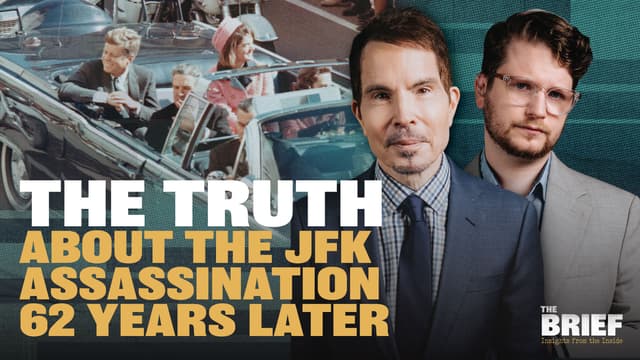
And then on November 22, it all came to a tragic end.
As his motorcade drove through downtown Dallas, Kennedy was shot and killed by an angry, avowed communist by the name of Lee Harvey Oswald.
JFK’s assassination didn’t merely shock the nation—it shattered it. The Camelot dream broke into a million pieces.
It’s no exaggeration to say that Kennedy’s sudden death was the single most traumatic event in America in the 20th century, not because it was the worst event, but because there was nothing anyone could do to make it right.
The nation would never be the same.
I’m Larry Elder for Prager University.