William Howard Taft: The Really Big President
William Howard Taft served as both the President of the United States and the Chief Justice of the Supreme Court — the only man to ever do so. Richard Lim, host of the This American President podcast, recounts the unique career of America’s 27th president.
This video is part of the American Presidents 5-Minute Video Series.
Once you've seen them all, take our Presidents Quiz.
Topics
Hosted By
 Richard Lim
You could argue that the two most powerful figures in America are the President and the Chief Justice of the Supreme Court.
Only one man has been both: William Howard Taft.
Unfortunately, our 27th president and 10th chief justice is mostly remembered for being…well, fat.
And that’s a shame because the focus on his weight has obscured a career that was as impressive as it was singular.
Taft was born in Cincinnati, Ohio on September 15, 1857. There was never any doubt that William would become an attorney. His grandfather, Peter Taft, was a prominent lawyer in Vermont and his father, Alphonso Taft, served as Attorney General under President Ulysses S. Grant.
To his father’s endless frustration, young William was a notorious procrastinator – a trait that lasted a lifetime. He would wait until the last minute to prepare his schoolwork and, later on, his law cases. But that’s all the time he needed because when it counted, he was always prepared.
In 1880, after graduating from Yale, Taft took a degree in law. With some help from his father, he got a job as an assistant prosecutor in Cincinnati.
He rose quickly to become a judge in 1887. He was only 29.
In 1890, President Benjamin Harrison appointed him as America’s solicitor general – serving in effect as the government’s lead attorney. Taft thrived in the position, winning 15 out of 18 cases before the US Supreme Court.
In 1892, he returned to Cincinnati as a federal judge.
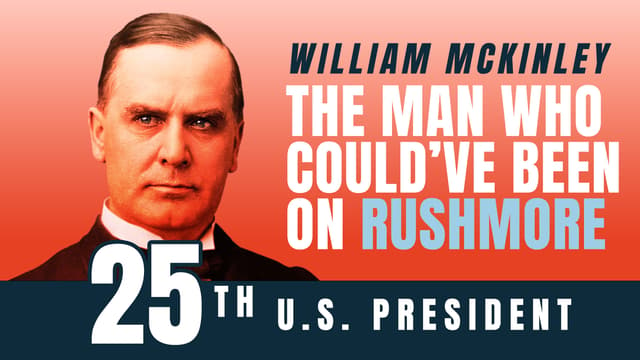
His ultimate ambition, a seat on the High Court, seemed to be within his grasp. When President William McKinley summoned him to the White House in 1900, Taft thought his dream might be coming true. But McKinley had another job for him: Governor of the Philippines.
The United States had just acquired the islands as a prize of the Spanish-American War but didn’t exactly know what to do with it. There were two problems: a lingering insurgency and no history of democracy.
The US military solved the first and Taft solved the second.
He did it by patiently building up the islands’ legal and physical infrastructure. More importantly, he did it by treating the Filipinos as equals, involving them in every step of the process.
No one ever doubted Taft’s skills as a legal theorist – now they learned he was also a skilled administrator. His future Secretary of War Henry Stimson, who also served under presidents Herbert Hoover, Franklin Roosevelt, and Harry Truman, said Taft was the best administrator of them all.
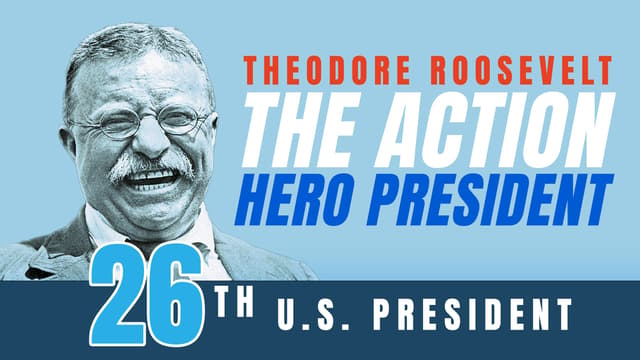
The Filipino people so admired the work he had done on their behalf that when new President Theodore Roosevelt offered Taft a seat on the Supreme Court in 1903, they staged large public rallies to convince him to stay.
It worked – Taft turned down Roosevelt’s offer.
Roosevelt finally got Taft back to the US, appointing him as Secretary of War in 1904. Upon his return, Taft quickly won over his boss. Roosevelt gushed, "He has the most lovable personality I have ever come in contact with.”
In 1908, Roosevelt declared Taft to be his preferred successor.
With TR’s endorsement, Taft easily defeated Democratic candidate William Jennings Bryan.
As president, Taft continued many of Roosevelt’s policies, such as busting trusts, regulating the railroad industry, and putting land under federal protection. In fact, Taft ended up busting more trusts and protecting more land than his fabled predecessor. He was also the first president to appoint a woman, Julia Lathrop, to head a federal agency, the US Children’s Bureau.
One would think that Roosevelt would have been proud of his successor’s record, but the two men diverged on a key issue: Taft was a constitutionalist. If he didn’t believe a law or executive action was constitutional, he wouldn’t do it. Teddy never cared much for such legal niceties. If he wanted to do something, he’d find a way around the Constitution.
This might have remained a philosophical dispute between friends, but it boiled over into open warfare when Roosevelt decided he wanted his old job back. When he failed to unseat his protégé at the 1912 Republican Convention, TR bolted the party altogether and ran as a third-party candidate.
Troubled by the burdens of the office and his rift with his old friend, Taft began to eat compulsively. His weight ballooned to 350 pounds. But, no, the legend that he got stuck in a bathtub is not true.
Roosevelt and Democratic candidate Woodrow Wilson campaigned as progressives, seeking to fundamentally change the American political system. Taft steered a more traditional course.
Unfortunately, his campaign theme – defending the Constitution – excited few voters at a time when progressivism was all the rage.
Roosevelt’s candidacy split the Republican vote, handing the election to Wilson.
After leaving the White House, Taft served as a law professor at Yale. Freed from the stress of elective office, he promptly lost 75 pounds.
In 1921, Taft finally realized his life’s ambition when Republican President Warren G. Harding appointed him as the Chief Justice of the Supreme Court.
As chief, Taft did more than any chief justice to modernize the Court and secure its status as a co-equal and independent branch of government.
This was best illustrated by Taft’s push for the Court to have its own building. For decades, it had met in the Capitol – symbolizing its dependence on Congress. Thanks to Taft, when the Supreme Court Building was completed in 1935, it finally had a structure worthy of its stature.
As far as Taft’s own stature, we can say this: he was no lightweight.
I’m Richard Lim, host of the This American President podcast, for Prager University.