Colonial America: Why Do Americans Speak English?
The Spanish got to the New World first. The French built the biggest forts. The Indians knew the land best. So how did the English come to dominate North America? Thomas Kidd, author of American History Volumes 1 and 2, walks us through the unlikely rise of the English colonies—and how they laid the foundation for the United States of America.
Topics
Hosted By
 Thomas Kidd
Why do Americans speak English? Why don’t we speak Spanish? Or French? Or Algonquian, for that matter?
It may seem like a silly question, but it’s not. The Spanish were in the Americas for a hundred years before the English arrived in Jamestown in 1607. The French had a major military presence in North America and the largest army in the world for most of the 18th century. The Indians, of course, had been here for untold millennia and knew the land better than their European adversaries.
So, how was it that the English came to dominate them all?
Our answer begins with Columbus. When the great explorer opened the way to the New World, he oriented the Spanish not toward North America, but toward Central and South America. There, the Spanish discovered gold and silver, making them the richest and greatest power in Europe in the 16th century.
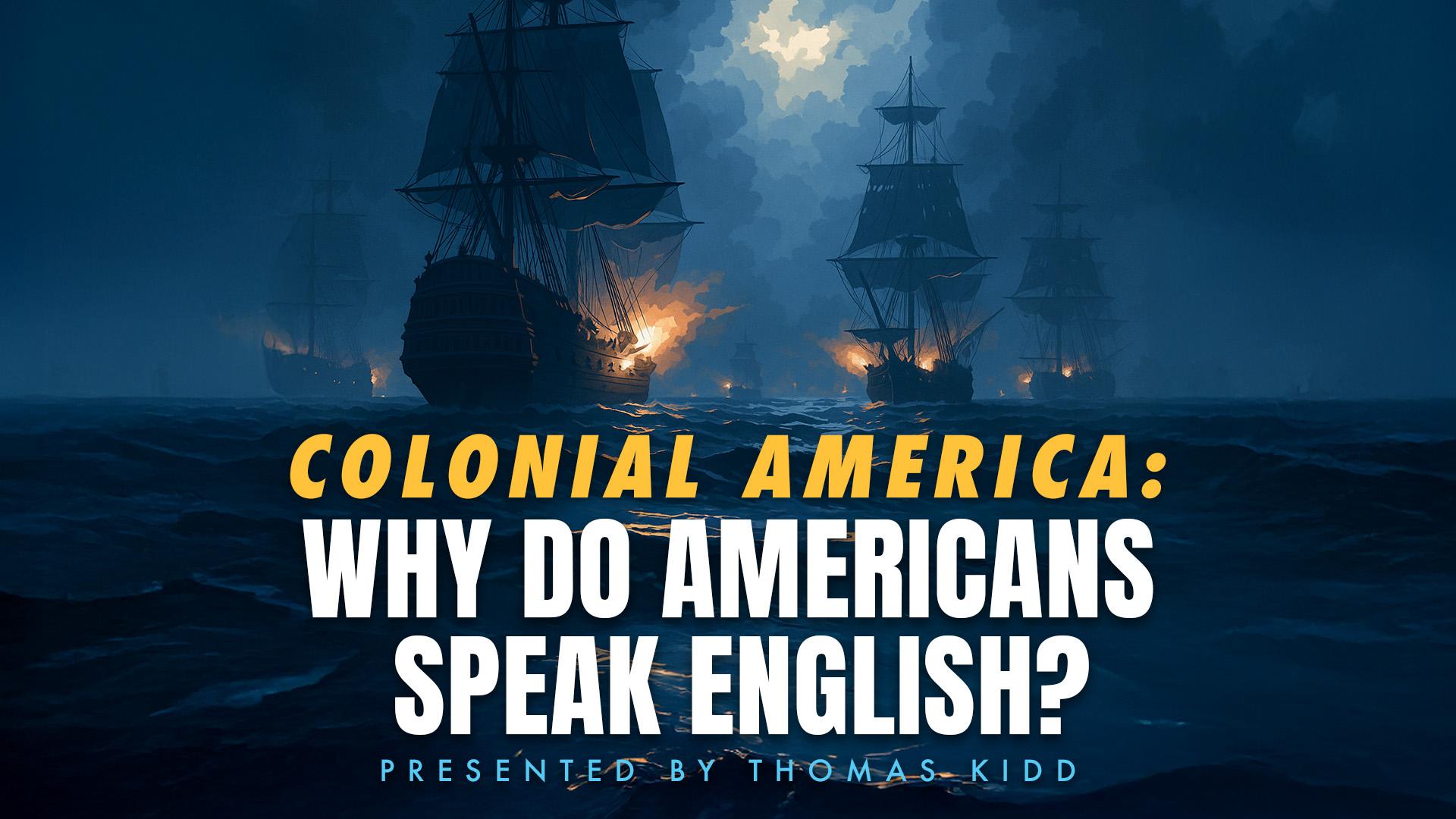
In 1588, they used those riches and their vaunted armada of warships to launch an invasion of England. But this attempt at conquest ended in disaster, thanks to a brilliant English naval strategy and a big assist from Mother Nature in the form of ship-destroying storms.
Spanish dominance of Europe ended with this defeat. Had things gone differently, it’s more than likely they, at some point, would have added North America to their empire.
The French also had a chance to take control of the continent. The explorer Jacques Cartier sailed into the Saint Lawrence Seaway in 1534. French fur traders were doing business with the Indians not long after. To support the lucrative trade, the French built a series of impressive fortifications across North America. But as lucrative as the business was, it curiously never attracted many French settlers.
The Indians had a different problem: no immunity from European diseases. This turned out to be — unintentionally — the Europeans’ most powerful weapon in subduing the Native American peoples.
The other problem the Indians had was that they were completely outgunned. Europeans had weapons far in advance of anything the Indians possessed.
If timing is everything, the English arrived in North America at just the right moment.
The Spanish were spent, the French were indifferent, and the Indians were simply overmatched.
It’s not like the continent was handed to the English on a silver platter; it took 150 years and countless setbacks, disasters, and hardships for the English to pull it off. But they succeeded. How did they do it?
To answer that, we need to look at what distinguished England from its neighbors. Beginning with Magna Carta in 1215, the English, more than any other European nation, had a tradition — written into law — that respected individual rights and limited the power of the monarchy. While this tradition of liberty emerged in the British Isles, it found its most fertile soil in North America.
The Mayflower Compact of 1620, in which the Pilgrims committed themselves to establishing a self-governing colony, personified that tradition. An ocean away from the Mother Country, they had no choice but to rule themselves. And once they tasted true freedom, they couldn’t give it up.
The case of Roger Williams is a good example.
Williams argued bitterly with the Puritan leaders of the Massachusetts colony. They believed the state could command religious belief. Williams asserted faith was a spiritual matter between the individual and his God. Threatened with arrest, Williams slipped out of Massachusetts in the middle of a blinding snowstorm to avoid capture.
Resettling in Narragansett Bay, Williams started his own colony, Rhode Island, in 1636. It became famous as a haven for nonconformist thinkers like Anne Hutchinson, whose zealous Christian teachings likewise ran afoul of Puritan authorities.
Williams was a prototype of the early American: unconventional in thinking, undaunted in the face of danger, unwavering on principle.
America was the perfect place for this kind of person.
The land was immense, seemingly boundless, available to anyone with the ambition and fortitude to seize and work it—and to fight off Indians. Victory in that fight was by no means inevitable. There were moments in the 17th century when, had the Indian tribes united, they could have wiped out the settlers.
But they never did, and year after year, more colonists arrived. By the 18th century, the population in North America was roughly doubling every 20 years, thanks to a high birth rate and unceasing waves of immigration.
Having risked everything to make the Atlantic crossing and establish themselves in a new land, no one was going to tell these intrepid souls how to live, especially no far away government, even one as enlightened as England.
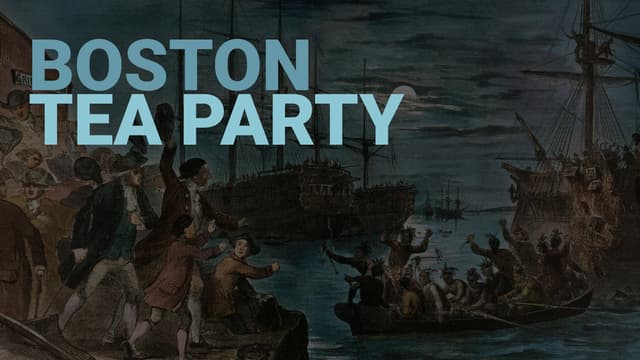
Ultimately, that spirit led the colonists to declare their independence in 1776.
Ironically, that the Americans fought so hard and sacrificed so much to achieve that independence is a testament to the values of the Mother Country. In their quest for self-rule, it was the English example these former English subjects, now Americans, were following.
So, why do Americans speak English? Because it’s the language of freedom.
I’m Thomas Kidd, author of American History Volumes 1 and 2, for Prager University.