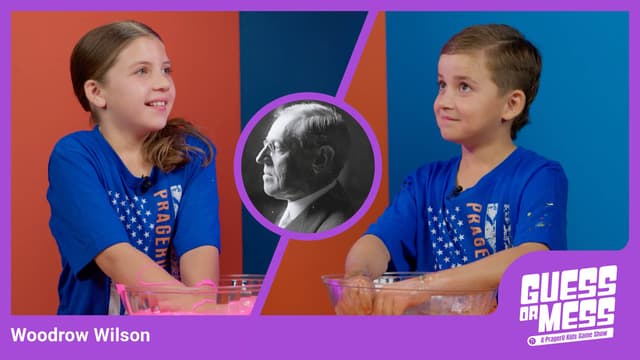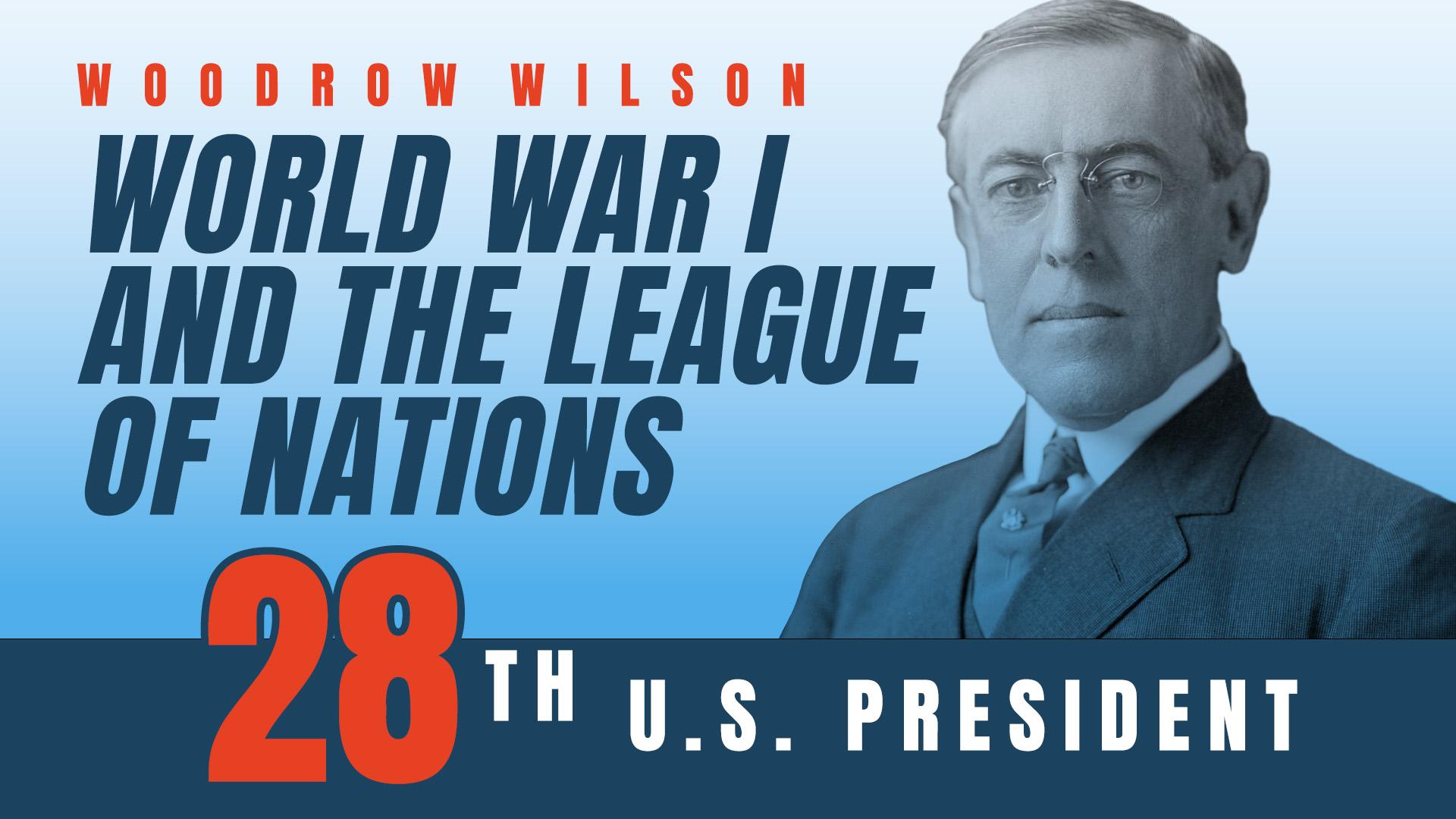
Woodrow Wilson: World War I and the League of Nations
In his first term as president, Woodrow Wilson sought to transform America. In his second term, he sought to transform the world. RJ Pestritto, professor of politics at Hillsdale College, describes how this once-obscure academic became one of America’s most influential presidents.
This video is part of the American Presidents 5-Minute Video Series.
Once you've seen them all, take our Presidents Quiz.
Topics
Hosted By
 RJ Pestritto
For over a hundred years, the United States of America had relied on the genius of individuals to solve problems. It was often chaotic but incredibly productive, leading to the greatest economic expansion in world history.
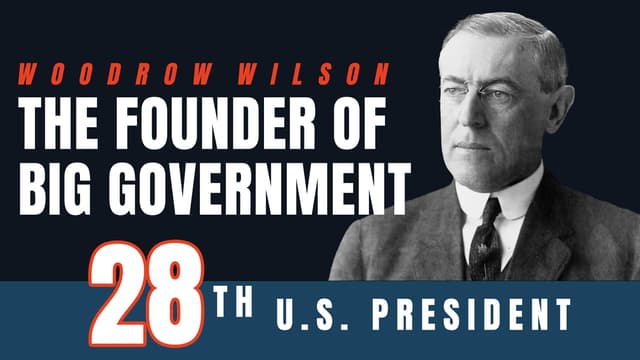
For Woodrow Wilson, the 28th president of the United States, the time had come to bring order to that chaos. That would mean less freedom for the individual, but, at least in theory, more equality across society.
It was an exchange that perfectly fit into his progressive worldview: that the government should be active in every aspect of American life.
In a remarkable first term, Wilson laid the groundwork for this transformation of America.
In his second term, Wilson sought to transform the world.
The First World War — 1914 to 1918 — gave him the opportunity.
Initially, Wilson did everything he could to keep the nation out of that war. In fact, the reason he won his re-election in 1916 was his promise not to send American boys to fight on another continent.
But within two years, over two million Americans would be on that continent. Over a hundred thousand would die.
German aggression, specifically its submarine warfare that killed hundreds of Americans, made it very difficult for Wilson to keep the nation out of the war.
The final straw was the infamous “Zimmermann Telegram” in which the German government promised to help Mexico reclaim much of the Southwest if Mexico would stir up trouble along the Rio Grande.
On April 2, 1917, Wilson asked for a declaration of war. Congress gave it to him four days later.
If Wilson believed the government was supreme during peacetime, how much more so during wartime? To supercharge the war effort, Wilson essentially took control of the US economy. He nationalized whole industries, rationed food and fuel, fixed prices, and raised the top income tax rate to 77%.
Civil liberties were severely curtailed. Criticism of the war was essentially forbidden. Violators were imprisoned under the Espionage and Sedition Acts of 1917 and 1918. German composers like Bach and Beethoven were banned, teaching the German language in schools was prohibited, and sauerkraut was renamed “liberty cabbage.”
To his credit, Wilson left the prosecution of the war to his generals, and America did indeed turn the tide in favor of the Allies.
On November 11, 1918, the Germans, unable to counter America’s economic and military might, agreed to stop fighting.
Peace was at hand.
But what would that peace look like?
As always, Wilson had a vision. He called it the Fourteen Points.
The key point was the creation of an international League of Nations.
Wilson was so committed to this idea that he decided to go to Europe personally and negotiate the peace agreement. Europeans greeted him as a conquering hero, lining the streets wherever he went.
Wilson’s impulse was to give Germany generous peace terms. He wanted what he called “peace without victory.” But the French and British saw things much differently. Having suffered so grievously, they wanted Germany severely punished.
Wilson thought that was a terrible mistake, but eventually yielded. It was a price he was willing to pay to get the Allies to agree to his League of Nations.
But while Wilson had sold the League to the Europeans, he couldn’t sell it to Congress.
Republicans and even some Democrats were leery that the League required member nations to counter “external aggression” against “all members.” They feared this could lead to endless American involvement in foreign wars.
Wilson brushed aside their concerns and took his case directly to the American people, convinced that once they understood it, they would embrace it. The speaking tour took everything Wilson had and more.
On October 2, 1919, he suffered a massive stroke, rendering him partially paralyzed.
Amazingly, his medical condition was concealed from the American public – and even from his own cabinet – during the final eighteen months of his presidency.
In this unprecedented situation, his wife Edith secretly issued directives on her husband’s behalf. Some have called her America’s first female president.
Had Wilson been willing to compromise with Senate Republicans on the League question, maybe he could have gotten it ratified. But he refused.
In a stinging rebuke, the Senate rejected Wilson’s dream. One year later the American people pronounced their own verdict. They elected Republican Warren Harding to be their new president in a landslide.
They had had enough of Wilson’s progressivism. But the setback was only temporary. The ideas that Wilson espoused — government entry into many aspects of our lives and, with it, the massive expansion of the federal bureaucracy — would be given new life with the ascension of another Democrat and Wilson protégé, Franklin Roosevelt.
Wilson’s big government ideas are still with us today. They are his true and lasting legacy.
I’m RJ Pestritto, Professor of Politics at Hillsdale College and author of Woodrow Wilson and the Roots of Modern Liberalism, for Prager University.