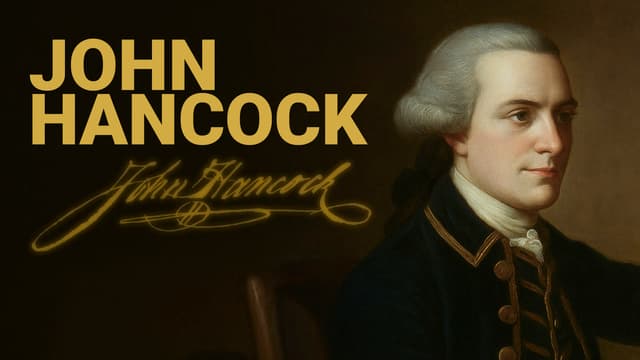
John Hancock: The Signature of Independence
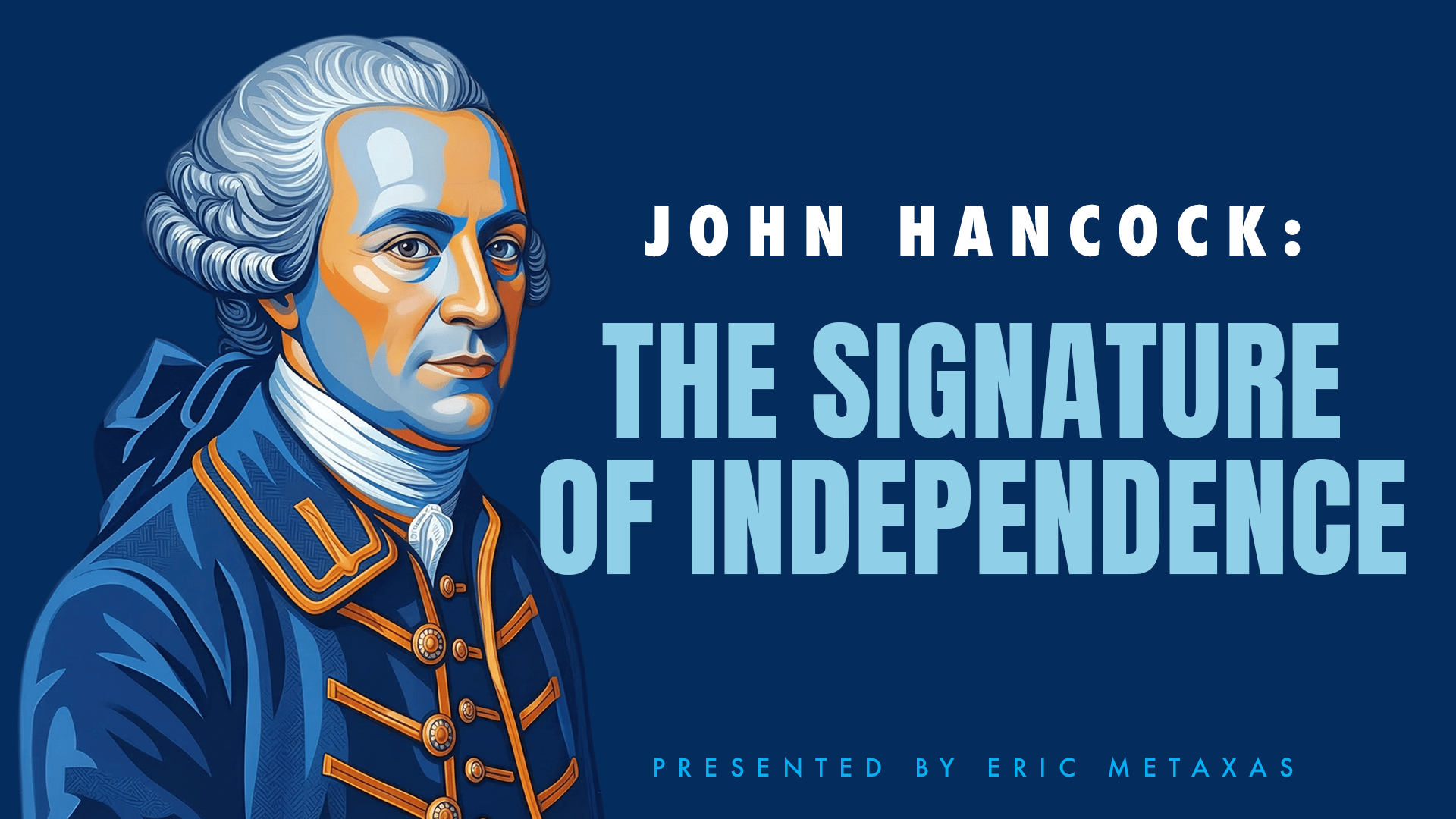
Look at the American Declaration of Independence and what’s the first thing you notice? The answer is probably the signature of John Hancock. But John Hancock’s real legacy isn’t how he signed—it’s what he stood for. Eric Metaxas, author of Revolution, tells the story of the man who put his name—and fortune—on the line for American independence.
Click here to watch more videos in the Unsung Heroes of the Revolution playlist.
Hosted By
 Eric Metaxas
Look at the American Declaration of Independence and what’s the first thing you notice? The answer is probably the signature of John Hancock.
Who was this man? Why did he sign his name with such a flourish? And what role did he play in the struggle for independence? The answers will tell us much, not only about Hancock, but about the founding of the United States.
John Hancock was born January 23, 1737. As happened to so many of his contemporaries, his life changed dramatically when his father, a minister, died. John was just seven years old.
His uncle, Thomas, a prosperous Boston merchant, adopted him. Thomas and his wife did not have children of their own. They promised John’s mother that they would provide the boy with the best education money could buy. They kept their promise.
John went to a top prep school and then to Harvard. But the best education he received wasn’t in the halls of academia — it was from the uncle he came to love as a father. Thomas Hancock took John with him to business meetings, carefully coaching him on the ins and outs of trade: who could be trusted and who couldn’t, which ship captains were reliable and which weren’t, what goods brought the most profit and what goods drew in the most customers.
Thanks to his uncle’s tutelage, John was prepared to take over the House of Hancock when Thomas died in 1764. At 27, John was suddenly one of the leading merchants in the Northeast.
But he couldn’t have come into the business at a worse time. The American economy was suffering a depression following the end of the French and Indian War. Supplying British troops had been good business and now that business was gone. Only by careful management, a round-the-clock work ethic, and some prudent investments did Hancock manage to stay afloat while other Boston merchants were falling into bankruptcy. When the economy began to recover, Hancock was one of the few merchants still standing.
Within a few years, he was not just a leading merchant — he was the leading merchant in Boston, and its richest citizen.
Boston, of course, was the birthplace of the revolutionary movement. Initially, Hancock tried to stay out of it. But neutrality was not an option. With business interests both at home and in England, he had to choose a side. He chose liberty.
Once he did, there was no turning back.
In the spring of 1775, the British occupied Boston, forcing Hancock to flee the city. His mansion became the new home of British General Henry Clinton, and Hancock’s name appeared on the king’s list of traitors — a list that, if the rebellion failed, meant the gallows.
Yet Hancock didn’t waver. His wealth and influence became indispensable to the patriot cause. He gave generously — often recklessly — to finance militias, buy supplies, and keep the resistance alive. While others offered speeches and pamphlets, Hancock opened his coffers.
His commitment was recognized by his peers. When the Second Continental Congress convened in Philadelphia in May of 1775, Hancock was elected its president. He was no figurehead. He essentially managed the Revolution — raising money, dispersing funds, keeping accounts. But that was a fraction of his contribution. He kept close tabs on the Continental Army’s progress, oversaw military supply and recruitment, and cultivated foreign alliances.
After the Congress adopted the Declaration of Independence, Hancock was the first man to sign. When asked why he signed so boldly, he is reported to have replied, “So that King George can read it without his spectacles.” The line is probably apocryphal, but the sentiment behind it is not.
Hancock’s story did not end with that defiant act of dramatic penmanship. Throughout eight years of war, Hancock worked himself nearly to death in service of “the glorious cause.” Though plagued by painful gout that often left him unable to walk, he refused to step back. While George Washington and the Continental Army fought in the field, Hancock fought to keep the fragile confederation of states together. Given the sharp disagreements between the delegates, this was no mean feat.
The war finally ended, but Hancock’s service did not. The state of Massachusetts elected him its first governor in 1780, a post he held — with only brief interruptions — for the rest of his life. In that role, he worked to knit together a war-torn people, balance liberty with order, and prove that self-government was more than an ideal — it was possible.
John Hancock never led troops into battle. He led with his pen, his purse, and his resolve. Above all, he gave his name — forcefully, indelibly — to the document that announced America’s birth to the world.
That’s why, 250 years later, “John Hancock” remains a synonym for “signature.” In a way, he signed the Declaration for all of us — and the nation he helped to create will forever bear the mark of his commitment and courage.
I’m Eric Metaxas, host of Socrates in the City and author of Revolution, for Prager University.