Road to Liberty: Treaty of Paris
By the time news of Cornwallis's surrender at Yorktown had reached Parliament on November 25, 1781, Lord North had resolved to suspend all further military operations in the colonies. As support for the war effort had waned, Parliament passed a resolution proclaiming that "the war in America be no longer pursued for the impractical purpose of reducing the inhabitants to obedience by force." The Redcoats began to evacuate the American colonies in 1782, and peace negotiations were set to begin in Paris. With hostilities coming to an end, Lord North abdicated his position as Prime Minister just as, across the Atlantic, Washington resigned as commander in chief and retired to his Virginia home. The Marquess of Rockingham, assuming the office of Prime Minister in place of Lord North, was prepared to recognize the free and sovereign United States.
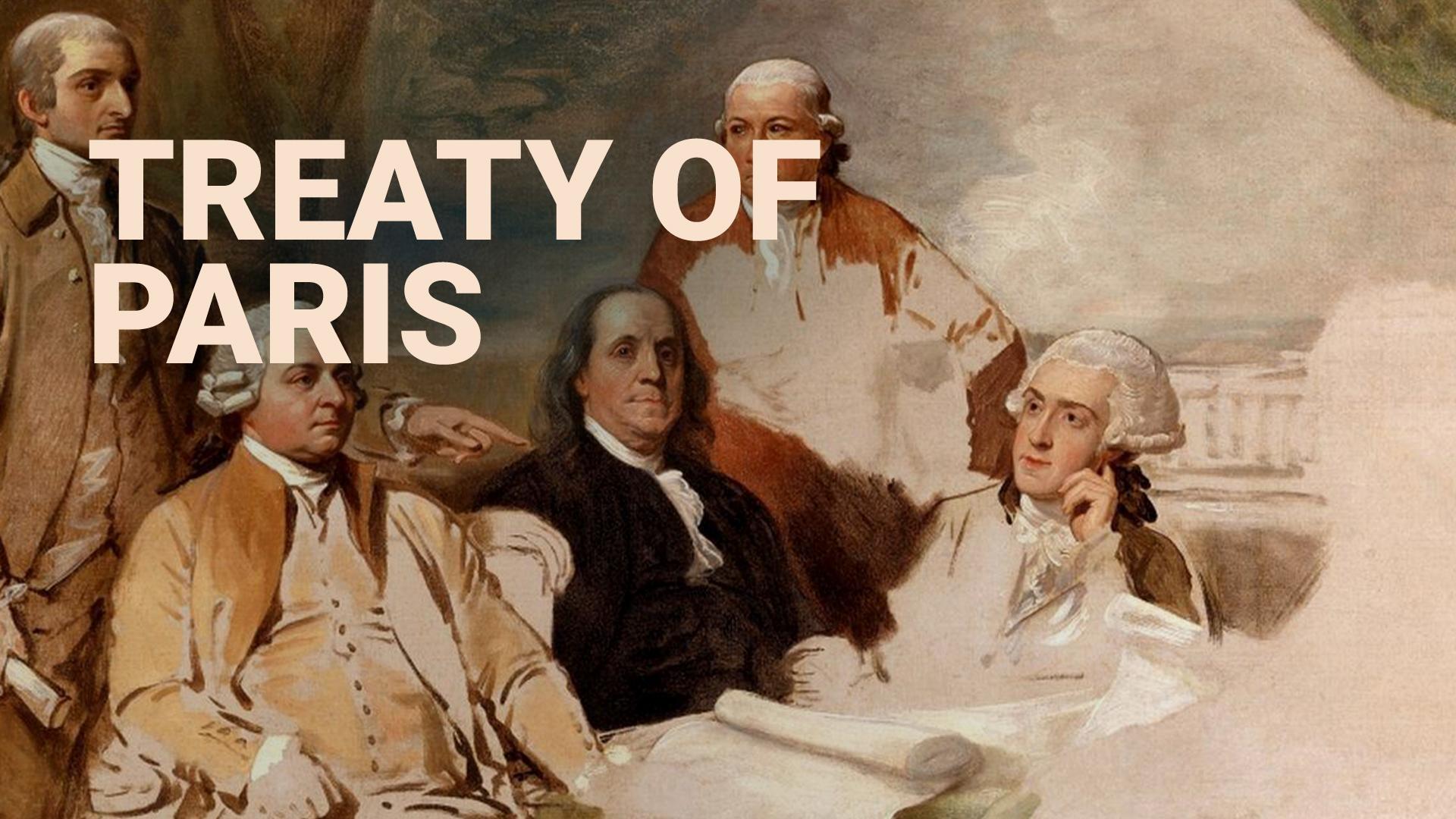
Signed on September 3, in the Hotel d'York, the Treaty of Paris marked the end of the eight-year-long American Revolutionary War and recognized American independence. On that day, British officials Richard Oswald and Henry Strachey convened with US ambassador to France, Benjamin Franklin, as well as a body of American negotiators, including John Adams, John Jay, and Henry Laurens.
An able negotiator, Franklin had skillfully managed to settle the treaty upon terms that favored America's unique interests as a young republic. Itemized in ten articles, these terms established the western, eastern, northern, and southern boundaries of the nation at the Mississippi River, the Atlantic Ocean, Canada, and Florida, respectively; it also granted New Englanders fishing rights in the waters off Newfoundland. The newly-sovereign states were encouraged to refrain from persecuting Loyalists and to return their confiscated property.
On January 14, 1784, the final treaty was ratified by the Continental Congress. The United States was thus established as a free and sovereign nation.