China Returns to Mao
In the decades following the death of Mao Zedong, China enjoyed relative economic freedom and unprecedented growth. But under Xi Jinping, Mao-like government control has made a comeback, weakening China’s economy. Helen Raleigh explains how socialism is once again failing China.
Topics
Hosted By
 Helen Raleigh
Socialism is failing China.
It wouldn’t be the first time.
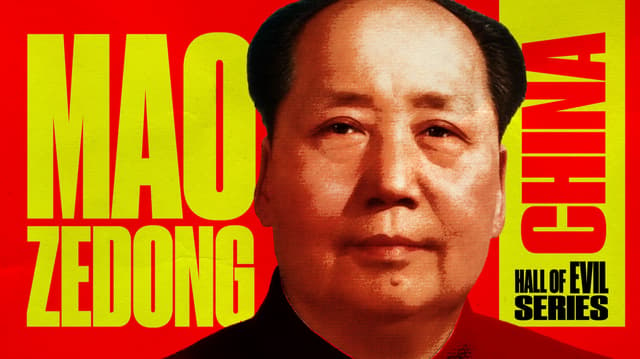
After the Chinese Communist Party (the CCP) took over the country in 1949, party leader Mao Zedong set out to create a socialist paradise. He forced farmers to sell their produce at fixed prices, nationalized industries, and abolished private property.
Things went from bad to very much worse.
Between 1958 and 1962, China experienced the worst famine in human history. Estimates range as high as 50 million dead.
Throughout Mao’s reign, many more were exiled, jailed, or killed.
After Mao died in 1976 signs of a free market began appearing around the country. Some brave farmers sold a portion of their produce at market prices. In the cities, black markets emerged: haircuts, shoe repairs, and other services were bartered for food.
Instead of cracking down as Mao would have done, his successor Deng Xiaoping realized that for the CCP to survive it had to adapt; it had to allow the Chinese people a measure of freedom.
The free market is like a grapevine; it thrives wherever it’s given a little room to grow. Farm yields quickly doubled and tripled. Urban shops sprang up everywhere. The more freedom the party granted its citizens, the more the nation prospered. Within three decades, China transformed itself from an impoverished nation to the world’s second-largest economy. In that time, 800 million Chinese lifted themselves out of poverty.
One of them was Jack Ma.
Born in 1964, Ma, like most Chinese, grew up poor. He became an English teacher in 1988, making $12 a month. During a trip to the U.S. in 1995, Ma used the Internet for the first time and recognized its potential. Upon returning to China, he founded an e-commerce company called “Alibaba,” providing an online marketplace for small businesses and bargain-hunting consumers to trade directly with one another.
Alibaba became a huge success. Its $150 billion initial public offering in 2014 was the largest in the history of the New York Stock Exchange. Ma became the richest person in China, with an estimated worth of $25 billion.
Stories like Ma’s were repeated a thousand times over. Capital poured in from around the globe. The nation’s economy grew by 9% or more per year.
To most, it was a thundering endorsement of the power of the free market.
But that’s not how China’s new leader, Xi Jinping, saw it.
It wasn’t entrepreneurs like Jack Ma who deserved the credit for the Chinese miracle, it was socialism and the CCP. For Xi the path to more prosperity was not more freedom, but more government control.
So, Xi slowly and deliberately forced China back toward the socialist economic model envisioned by Mao. Deeply suspicious of entrepreneurs and their independent ways, Xi decided to show everyone who was in charge.
And what better way to do that than by making an example of China’s most celebrated success story—Jack Ma.
In October 2020, Ma mildly criticized China’s overly complex banking system. That was too much for Xi. He ordered Chinese authorities to abruptly suspend the $37 billion initial public offering of the Ant Group, a highly successful subsidiary of Alibaba.
The cancellation cost investors billions of dollars. The company was also ordered to pay a $3 billion fine for alleged unfair practices. Then, one day Ma just disappeared. No one knew where he was for months. In November 2022 Financial Times reported that he was living quietly in Tokyo. He’s rarely seen in public now.
Since Ma’s public shaming, China’s economic growth has slowed down significantly. The youth unemployment rate reached 21 percent in June 2023 before Beijing stopped publishing the data altogether. It didn’t comport with Xi’s “the government knows best” philosophy.
But almost no one in China is blaming Xi. No one dares. He has recently made himself president for life which is a slightly more polite way of saying he’s made himself dictator. Mao would be proud.
We’ve been conditioned to think that China will soon surpass the US as the world’s dominant economic power, but that scenario seems less likely now. The China juggernaut has stalled, and stagnation is a real possibility.
Xi might be getting stronger, but the Chinese economy is getting weaker.
Socialism never fails to fail.
I’m Helen Raleigh, author of Backlash: How China’s Aggression has Backfired for Prager University.